Nights in Beirut
So, I have been attending some fun events and thought I’d share some of the photos. I finally have some professional equipment, and although I’m still figuring out how to use it, I’m really enjoying shooting with my stories for the first time. Also, I have a newfound appreciation for photographers shooting in low light!
I did a story for Agenda Culturel on Onomatopoeia The Music Hub, and was lucky enough to end up there on a food night. It’s a really cool space and the founders are planning to elevate support for the music community in Lebanon, as well as do some interesting projects. Below are photos from Romy’s Food Night (delicious, by the way. She learned her badass cooking from her momma).


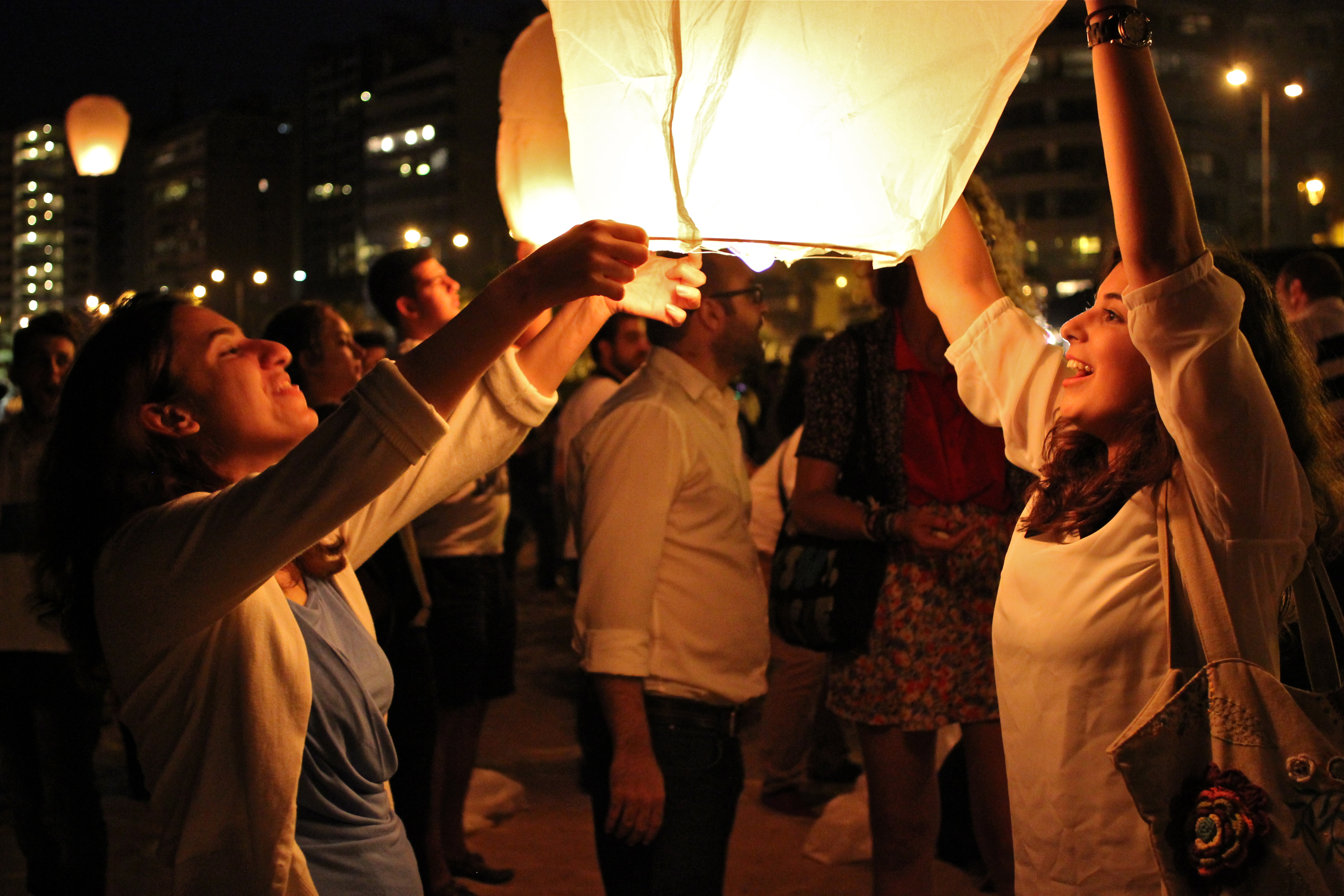
I also attended the Light a Lantern for Lebanon event, which turned out to be really hilarious and beautiful. The goal was to release lanterns all at once, with wishes, to represent hope for Lebanon. The event was also raising money for three different non-government organizations, which you could choose when you bought your lantern. The hilarious part came when it was time to toss the lanterns into the sky. First, the fact that the lanterns would not light unless they were sprayed with alcohol seemed like a bad idea, but whatever. All sprayed away and then the lanterns were lit and tossed into the air. Some took off high into the sky, while dozens of others started careening at people’s heads after quickly losing altitude. On fire. I personally hadn’t yet lit my lantern, as I was busy documenting my friend’s first lantern experience. In typical Lebanon fashion, just as I was starting to get sentimental about the country with the music and the beautiful lanterns moving across the night sky, I got knocked over my a flaming lantern and in the process, ripped my mine. There goes my wish! Ha. Lebanon…
More photo galleries to come soon (and hopefully they get better)! Stay tuned.


Omar Ibrahim’s Falling Dreams
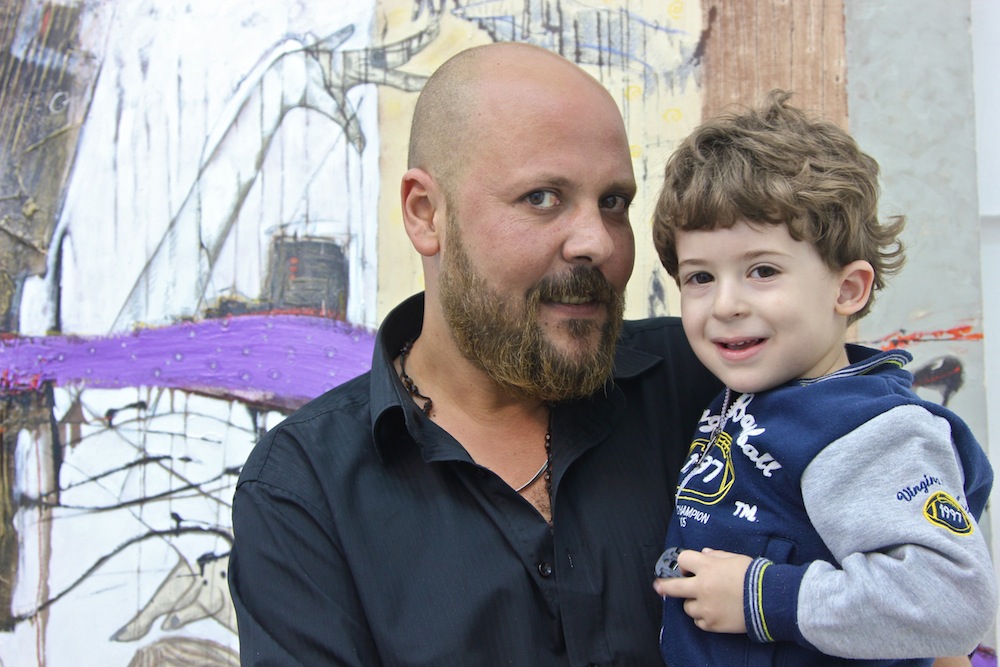
Omar Ibrahim with his son in front of one of his paintings.
This past Thursday, at 392RMEIL393, Omar Ibrahim’s exhibition, “Falling Dreams,” opened. Ibrahim is a Syrian artist who has worked internationally and currently resides in Beirut. This is his first solo exhibition in the city.
“How can we assert that these dreams are really falling, and not ascending upwards in a blue space, when the artist leaves us tangled within the ambiguity and the fragility of the backgrounds which do not obey the laws of direction and gravity? How can we assert that this brutishness of the chained horses, and their struggle towards freedom, is a struggle between lines and colors, and not a struggle between our reality and our torn-apart dreams and our fatigued souls? How can we stand up in front of these barbwires without feeling their spikes with a pain that is ours?” is written inside on a piece of paper to introduce attendees to the mixed media exhibition. Ibrahim says that this is a collection he has been working on for around 18 months.
According to Ibrahim, the metal piece below was the first he made in this collection.

The paintings and drawings are really best experienced in person, with each piece nuanced in texture and detail. The exhibition runs at 392RMEIL393 until May 25th. Photos of the opening and the art are below.


Workers’ Day 2014 Festival and Parade in Beirut
This past weekend was a busy weekend for advocates, activists and migrant workers in Lebanon. The three-day program wrapped up late yesterday afternoon, after a march through Beirut’s streets, from Dora to Mar Mikhael.
I missed KAFA’s book launching on Friday because I was out of town, but I managed to catch the cultural festival in Hamra on Saturday, as well as the march on Sunday. The cultural festival was lovely, with delicious food and great crafts being sold by representatives of different countries working in Lebanon. I ate from Sudan, Nepal, Ethiopia and Liberia all in one night. Where else can you do that?!
Saturday night ended with dancing and singing by a Sudanese man and an Ethiopian woman, with some break-dancing mixed in. It was really a lot of fun and nice to see migrant workers out enjoying a space in a large group. Some photos from the festival are included below.


Yesterday’s event was a march, which started in Dora and wound through the streets to Mar Mikhael. A couple hundred migrant workers, activists and advocates called for legal protection of migrant domestic workers. Photos of the march are below. I know from the workers I spoke with that yesterday was an amazing, happy feeling for many of them. Rarely are they allowed to march through the streets and let their voices be heard. It was a happy day.


Instagramming Lebanon
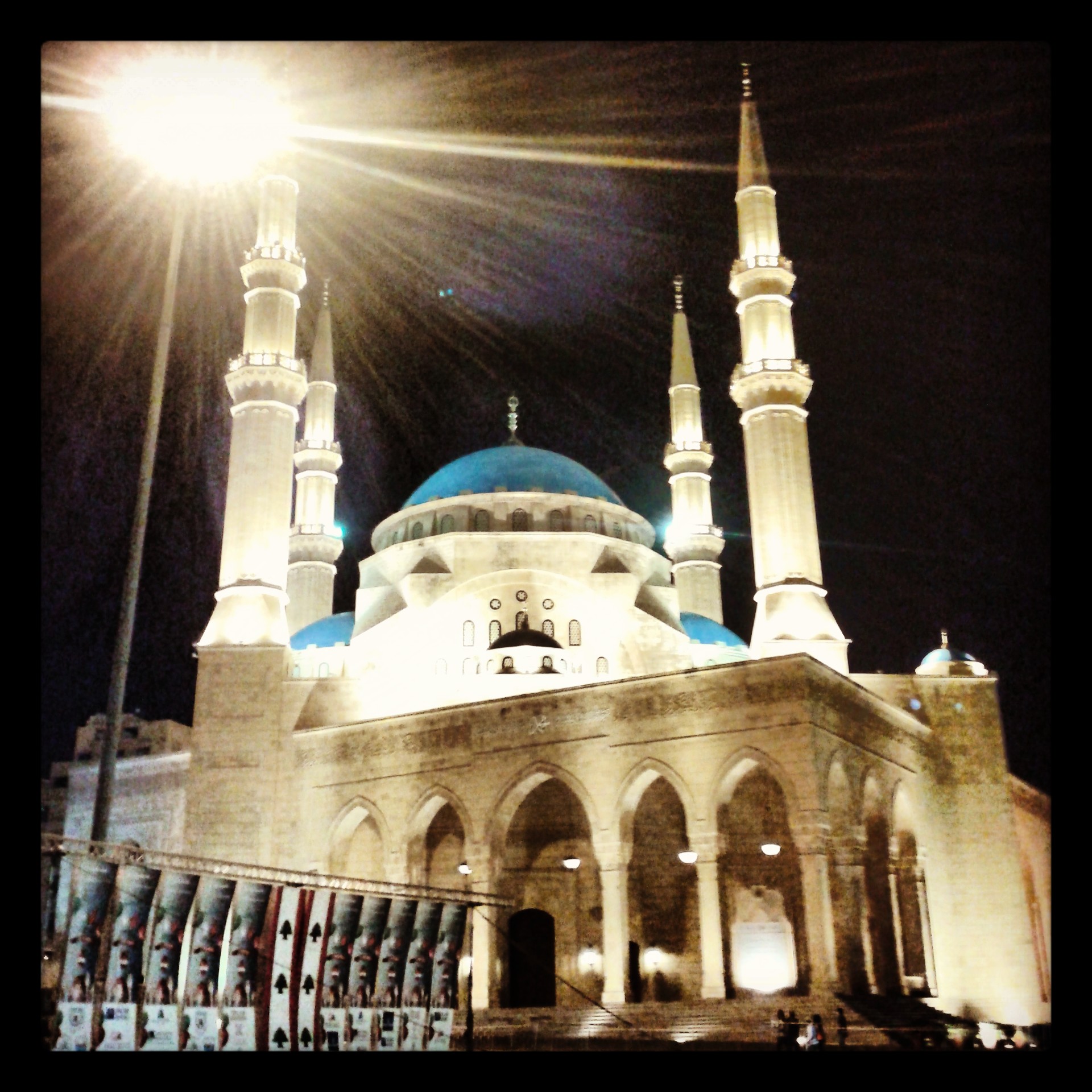
Hariri Mosque in downtown Beirut.
I was a late-comer to Instagram. I preferred Tumblr, blogging online and occasional tweets with photos attached. Also, I was a bit judgmental of the use of filters. But when I came to Lebanon (and finally traded in my Nokia brick for a Smartphone), I really started to enjoy posting photos from my phone of daily life in this country. Initially, I was overwhelmed at the number of photos I wanted to post to Instagram – everything seemed so beautiful and interesting.
Today, I am not longer overwhelmed, but I still find so many things worth instagramming here. And I have fully embraced filters (as an aspiring photographer, I guess that sort of damages my street cred), though I do retain some of my pride for still mostly abstaining from selfies. I find something new to photograph every single day in Beirut, even when I walk the same street. There is too much to ever exhaust even the most enthusiastic Instagrammer.
If you enjoy Instagram as much as I do, please do send me a link to your profile, especially if you are in Lebanon! I love seeing how different people see this country through their phones. I have attached some of my favorite personal Instagram photos below, but it’s just not the same unless you see it on the app. You can find mine here: http://instagram.com/melissatabeek!
Still, for me, nothing beats great photography – but Instagram is pretty cool, too.


Eggs-Press Yourself at Le Mall

Painted by Maya Akra, one of the 20 eggs displayed at Le Mall Dbayeh and Sin al-Fil, as part of a special exhibition “Freedom of Egg-Pression.” Happy Easter! All photos in this post were shot by OMAR ALKALOUTI.
In honor of the Easter holiday, I want to share a post about giant eggs and the people who painted them here in Beirut.
At Le Mall in Dbayeh and Sin al-Fil this month, there has been a special exhibition of giant Easter eggs titled, “Freedom of Eggs-Pression.”
Ali Zein, founder of A!iWA, who sold the concept to Le Mall, talked about how he came up with the idea. He wanted to think big around Easter and what else would come to mind but giant eggs? In order to make it interesting, he included a live-art exhibition for two days while the eggs were painted, then a social media campaign to vote for the best one.
“The idea came to me as I was searching for innovative ways to promote a brand during Easter. I was inspired by the quote “Think Big” and that is when it hit me: “Giant Easter Eggs!” Gradually the idea came alive,” Zein said.
This was no easy task though. Giant eggs equal giant work. Zein explained the process of building and getting them to Le Mall.
“It took three weeks to produce the 230 kg (over 500 pounds) eggs. They were made into two pieces, then joined together. There were 25 people working on 20 eggs – all manual labor!” They were trucked over to Le Mall after production was finished.
This fun display of eggs was less about religion and more about celebrating spring and the festiveness of the holiday, both for the painters and Zein. They wanted to focus more on the colorful, fun and light side of the holiday.
“Holidays in general, especially Easter and Christmas, have become really commercialized. It has pushed the boundaries of religion and people more often think of Easter as a spring festive holiday,” Zein said.
What an egg-cellent idea! (Had to get one pun in) Go and see the finished eggs while you still can. They are still there until the end of the month.
Start the Weekend Off With Something Beautiful – Safineh
“Sometimes I forget that Beirut is a port. And it kills me to keep forgetting.”
When I wake up in the morning, especially on a Saturday, I want to hear something that sets the tone for the day. This video is perfect for that.
“Safineh,” Arabic for “boat” or “sailing ship,” was created by Gabriel Ferneiné, a multimedia consultant, who has been gathering footage of Beirut’s port and its rooftops for years. The track was produced by Trash Inc’s Nabil Saliba. This is the result. Enjoy, and Happy Saturday!
Wildlife Rescues with Animals Lebanon
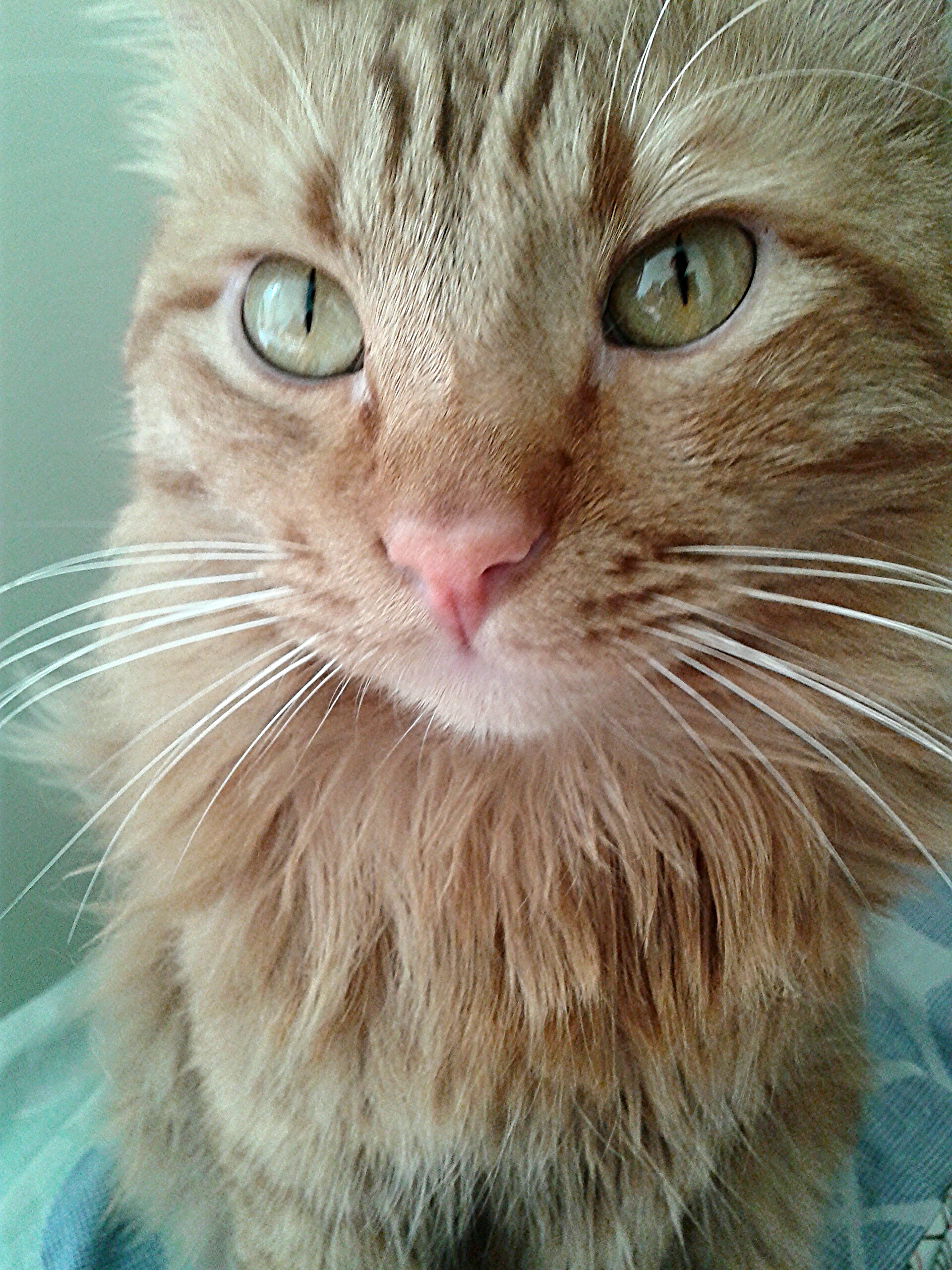
I didn’t know much about Animals Lebanon until I decided I wanted a cat. I wasn’t sure where to get one in Beirut, so I started doing some research and I found the organization’s website. I ended up adopting an orange, four-month-old kitten I named Fitz. He was a great kitten, and has since turned into a handsome man-cat.
During the process of adopting, I got to know the people who work at Animals Lebanon, and the work that they do. I started reporting stories about them with photographer Omar Alkalouti. We hung out on the foul banks of the Beirut River looking for a crocodile for hours (he was recently caught by a fisherman and turned over to the care of Animals Lebanon), where not even the bubbling brown waters could keep staff away.


In October 2013, we followed some of the team on the beginning of a rescue that they finally completed April 8 (originally it was two tigers and two lions, one lion died between October and the rescue), sending two tigers and one lioness from a private zoo to a sanctuary in France, where they will be cared for by wonderful people like Jean-Christophe Gerard, who flew to Lebanon twice for the rescue. The poor guy was still traveling until midnight last night.
(You can see more in-depth writing and photography on the rescues from my piece on Al-Monitor here).
RESCUE #1 – October 13, 2013
RESCUE #2 – April 8, 2014
On April 8, the staff told me stories about the past week and a half, bleary-eyed from a whirlwind of wildlife rescues and little sleep. They rescued the famous Beirut crocodile. Two baby hyenas that still need to be bottle-fed. Two tigers and one lion. And the last-known chimpanzee in Lebanon – also the reason that brought Executive Director Jason Mier to the country more than eight years ago – Charlie.

Charlie. Photo courtesy of Animals Lebanon.
Animals Lebanon, after trying to get this chimpanzee for over eight years, finally successfully confiscated Charlie this past Saturday from Animal City zoo. With two rulings in their favor and the strength of Lebanon’s recent joining of the Convention of International Trade of Endangered Species (CITES) behind them, they went in with police, lawyers, security guards, a European veterinarian and a representative of the judge to take him off the premises. The chimpanzee had been kept alone, something that is very harmful to chimpanzees. (See full press release here).
Quoted in Animals Lebanon’s press release, Doug Cress, coordinator of the United Nations Great Ape Survival Program said, “Chimpanzees are extremely social and intelligent animals that require mental and physical stimulation to thrive. If Charlie continues to live alone, he will undoubtedly suffer.”
It can’t be underscored how incredible it is how this organization has been able to do so much in Lebanon without laws to protect animals in a culture that has historically cared very little for animal welfare – something that is slowly changing with the efforts of people like those at Animals Lebanon. They are calling for everyone’s help to stand with them in their fight to keep Charlie. I suggest you do – I am.
One Million Refugees
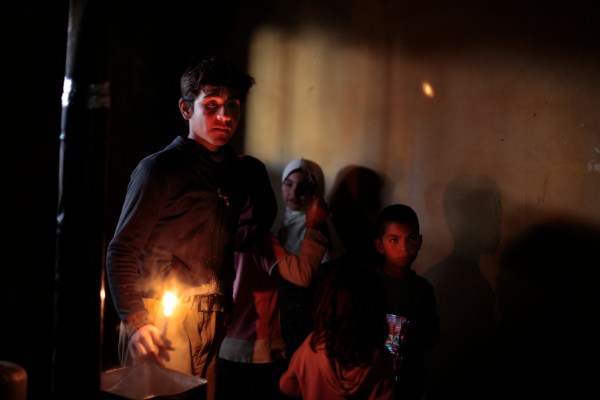
Ahmad, 13, and his siblings come to watch their mother be examined by volunteer Dr. Batley, part of the group providing aid in the area, Lebanese for Syrians. He brings a candle to show the doctor the frostbite on his mothers feet that is badly infected. There house has no running water, electricity, or furniture. The woman rest on a small mat on the floor of a dark shelter that the family of ten occupied when they fled the fighting in Al Qusair, Syria. Photo by Omar Alkalouti.
Today, the millionth refugee was registered in Tripoli, Lebanon. His name is Yehya. He is a 19-year-old from Homs. Yehya was trapped in Homs for two years before he fled to Yabroud, a border city. Finally, one month ago, he came to Lebanon. And today, he registered.
Going into the fourth year of Syria’s civil war, more than 150,000 people are estimated to have been killed, according to the Syrian Observatory for Human Rights. The International Committee of the Red Cross estimates more than 500,000 have been wounded. Refugees are pouring across borders, with more than 2.5 million registered in neighboring countries.
Lebanon is a small country, with a population around 4.5 million. The impact of the refugee influx is staggering. According to the UNHCR, they register about 2,500 new refugees per day – a number that equals more than a person each minute. The agency also says that per-capita, Lebanon has the highest concentration of refugees in the world in recent history. Not to mention, one million is the number for only the registered. According to Lebanese officials, the number of unofficial Syrian refugees in the country could be as high as 400,000. And the economic impact on Lebanon is immense – according to the UNHCR, the neighboring crisis in Syria cost the country $2.5 billion in lost activity last year. Jobs are impacted. Communities are impacted. Every aspect of lives are impacted.
There are many who are helping, and I have much respect for those who are doing so. But I can’t help but read all of the news today about the millionth refugee and wonder if anything is going to change. Is one million just another number? Will all of this attention bring more attention, more aid, more awareness to the crisis that is engulfing this region and particularly Lebanon – a country that has not only become a refuge but also a battleground for Syrian spillover. I can only hope so, for all of the people’s sake – Syrian, Lebanese and others – whose lives have been, are being, and will be, forever changed by this terrible war.
Migrant Workers’ Rights in Lebanon
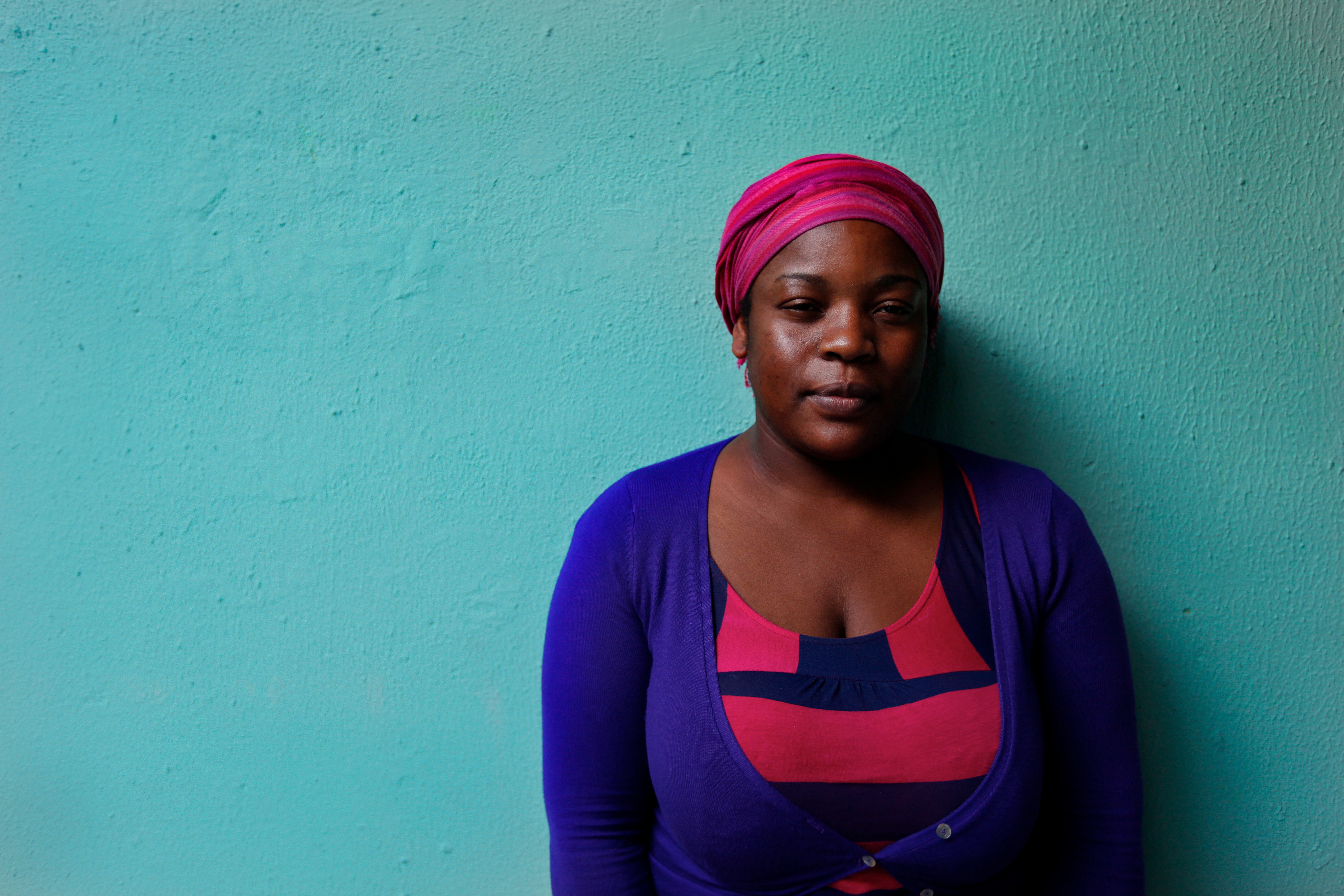
“Maimouna.” Photo by Omar Alkalouti, omaralkalouti.com.
The situation for migrant workers in Lebanon is difficult, to say the least. Unlivable for many. And for domestic workers in particular, as they have no protection under current labor laws. This leaves them extremely vulnerable to exploitation. Many of Lebanon’s estimated 200,000 migrant domestic workers – it is estimated that there are thousands more foreign workers in the country in addition to this number – who come to the country for work often face extremely challenging living and working conditions.
Aside from being excluded from the labor law, they are tied to their employer by the “kafala,” or sponsorship, system. This system makes it so that migrant domestic workers cannot enter or leave the country without consent from their sponsor. Additionally, they cannot change employment or travel without permission. Their documents (passport and travel documents) are taken from them and held by their sponsors nearly all the time, something that essentially traps the workers with their employer, unless they want to run away and leave their documents behind. But the workers aren’t only dependent on their employers in regard to their papers – they depend on their sponsor for food, shelter, wages, healthcare, etcetera.
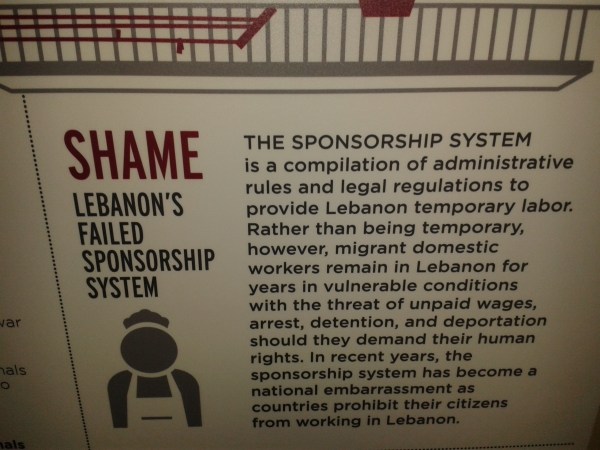
Click on the photo for the link that will show the full infographics.
As a result, cases of women in particular being beaten, murdered or committing suicide sadly is not a rare occurrence in this country. A recent example was reported on March 23, when an Ethiopian woman was raped by an employee of an agency for the recruitment of migrant domestic workers, according to the Internal Security Forces’ General Directorate. She was brought to the agency by her employer, who was lodging a complaint about her. While she was in the office, she was first verbally abused by the secretary, according to Al-Akhbar English, then another employee was called in to “discipline” the worker. She was beaten by this employee with his belt, forced to undress and then raped. Both the employee and the secretary, who had been within earshot of the incident, were arrested. (By the way, I recommend reading the above link on Al-Akhbar, it gives a good sense of the event that happened, as well as the mentalities of a lot of people in this country regarding migrant workers).
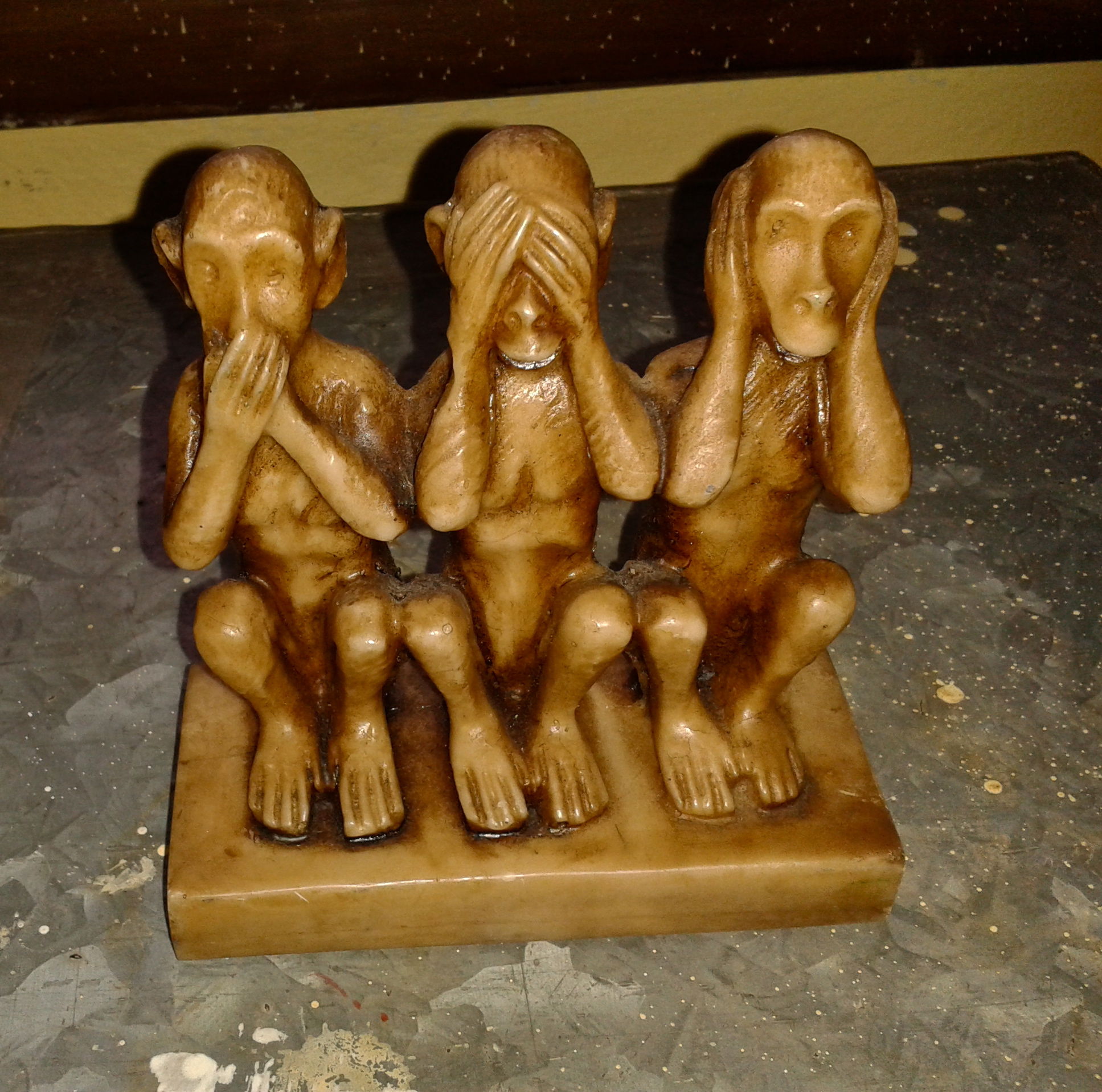
Speak no evil, See no evil, Hear no evil. Photo taken at the Migrant Community Center here in Beirut, Lebanon.
Where is the outcry? Where are the people rallying to protect this vulnerable population? This particular worker was lucky that her employer gave her consent to file a report. There are so many others that don’t have the ability to do this, either because their employer will not let them, and/or they don’t have the knowledge that they can and should file a report. And in this case, unlike in many other others, this story was circulated to the media by Lieutenant Joseph Msallem, who was quoted in Al-Akhbar English as saying,“Because this is no ordinary incident, publicizing the story is a message to all those thinking about abusing domestic workers. For this reason, we asked every domestic worker or those who can help them in similar situations to contact us on our hotline.”
But what about the scores of other workers who are trapped inside their homes? Who don’t have supportive employers? Whose employers see them as animals, undeserving of kindness, care and justice? How are their voices to be heard?
The Human Rights Watch estimated that in 2008, an average of one domestic worker died in Lebanon per week. Most of these deaths are a result of suicides or attempts to escape their employers. Even when they manage to escape, once their contract is broken, they no longer have identification documents and can end up in an even more deplorable situation. Prostitution, living in even poorer conditions, or working without papers for an employer that exploits the employee are all possibilities for a migrant worker who has run away.
In the 2014 HRW Report, this was the part the addressed the continued lack of progress on abolishing the kafala system, as well as legal issues regarding migrant workers in the past year.
Migrant domestic workers are excluded from the labor law and subject to restrictive immigration rules based on employer-specific sponsorship—the kafala system—which put workers at risk of exploitation and abuse. While outgoing Labor Minister Charbel Nahhas announced in January 2012 that he would look at abolishing the kafala system, in 2013 Labor Minister Salim Jreissati failed to do so or to put forward legislation that would protect the estimated 200,000 migrant domestic workers in the country. In July, a criminal court sentenced an employer to two months in prison, imposed a fine, and required her to pay damages and compensation to a migrant domestic worker whose wages she had not paid for years. Migrant domestic workers suing their employers for abuse continue, however, to face legal obstacles and risk imprisonment and deportation due to the restrictive visa system.
In June, the Association of Owners of Recruitment Agencies in Lebanon adopted a self-regulating code of conduct to protect the rights of migrant domestic workers, but the impact was limited in the absence of enforcement mechanisms.
Following the March 2012 suicide of Alem Dechasa-Desisa, an Ethiopian domestic worker, the trial of recruitment agency owner Ali Mahfouz, who is accused of contributing to her suicide, began in February 2013 but was postponed until February 2014.
In my time in Lebanon, I have met so many amazing migrant workers, some who are in a difficult situation, and some who have been able to do well here, with the kindness of their employers and the supportive network they are able to make. I just hope all of the fight and determination I have seen in the workers, as well as the organizations and people in the country helping them, is enough to change mindsets and laws in Lebanon to protect those that don’t always have the ability to protect themselves.
Pining For Public Libraries in Beirut
I miss public libraries. I saw this photo essay yesterday on the New Yorker and it made the longing all the more poignant. The photographer, Robert Dawson, spent 18 years documenting pubic libraries across the United States. In his introduction of his book to be released, “The Public Library: A Photographic Essay, he writes in his introduction, “Public libraries are worth fighting for, and this book is my way of fighting.” Only since I’ve lived in other countries without widespread public libraries have I realized what a gift it is to have access to them.


That being said, there are some cool used bookstores through Beirut. I found this one over the weekend, “Book Bazar,” on Jeanne d’Arc Street in Hamra. I was able to find some really great books in English (Arabic and French are there as well). Despite the spell that used bookstores never fail to cast on me, the air heavy with the smell of old pages, I have to say my favorite place to find books still remains Souk al-Ahad, or the Sunday Market. This is mostly due to the atmosphere, a place where you can find anything. Though the books may be moldy, it feels like so much more of an achievement whenever I’m able to find a treasure in the trash.
So it’s true, I will continue to pine for my public libraries past, but in the meantime, I’ll remind myself to be thankful there are still places, albeit few, to find used books here.


 look up