Rainbow Remembrance
May 15 is a significant day in the Middle East. It’s called Nakba, which translates as “catastrophe” in Arabic. 2012 marked the 64th year since the 1948 war between Palestine and Israel, during which time over 700,000 Palestinians fled or were driven from their homes by Israeli troops.
This continues to be important to people today because there are still Palestinian refugees who can’t go home. On the night of Nakba, I went to the Rainbow Theatre on Rainbow Street in Amman to a performance that included spoken word and rap music to commemorate the “catastrophe” and fundraise for a documentary about life in the refugee camp in Gaza called “Remember Us.”
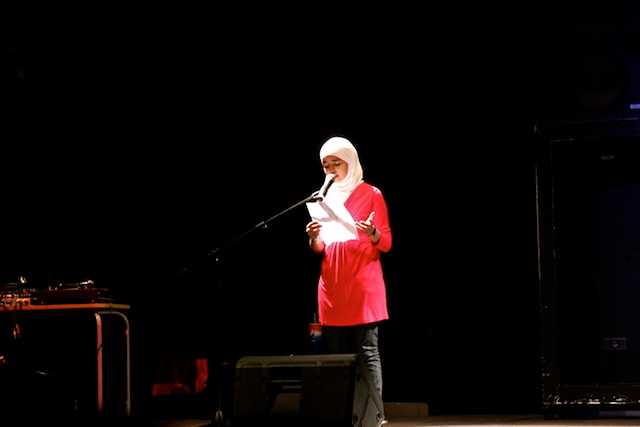
The spoken word, performed by three different women, was emotionally raw. I listened to their pain and felt guilty that I know so little about the life they spoke so passionately about. How did I not know about Nakba before two days ago? The women were so beautiful on stage, but with my lack of knowledge of their suffering, the tears welling up in my eyes felt superficial and undeserved.
One performer, Aysha El–Shamayleh, was particularly powerful. The last words of her final performance that night have stayed with me: “So to my generation – slow dance with the devil. You are never sinful, just human and forgiven. And I dare you to keep on living.”
Meet The Family
“Don’t stop,” says Ragad , handing me (yet another) chocolate, this time a Snickers, as we sit watching television for the seventh hour on their sage green couch and my new sister declares to the television host, ” the most handsome man in the world,” “Marry me, marry me, I will pay you!”
Welcome to my new family.
The home of Rateb and Lina is in Marj Al-Hamam (means meadow of doves), a large city in Western Amman. The house is the last on a quiet street off Al-Shabaque duar (circle), a rented place that looks out over a vast wheat field with olive trees. There are olive trees in our yard as well but the vegetation is untamed, tangling with old furniture and random objects, such as the metal trees my host father — a wedding planner — uses to decorate the wedding parties.
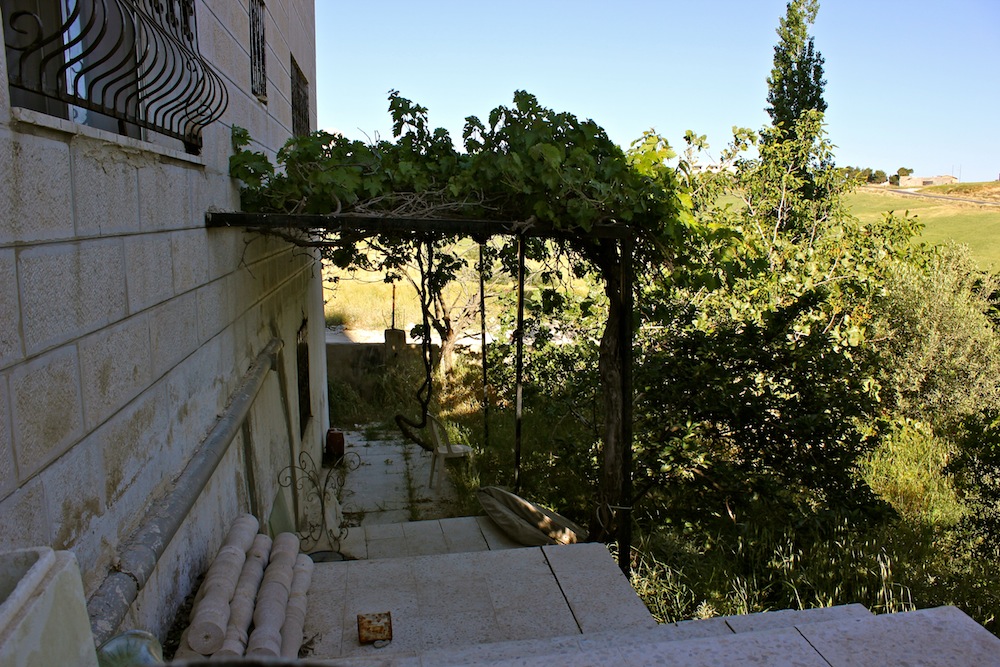
Backyard view.
Making Something of Nothing
Amman is a sprawling city with nearly uniform architecture – similar style, color and shape. This doesn’t diminish its beauty but adds to the visual power of its spread. I have already handfuls of photographs and pan videos cannot do the sight of these dwellings justice.
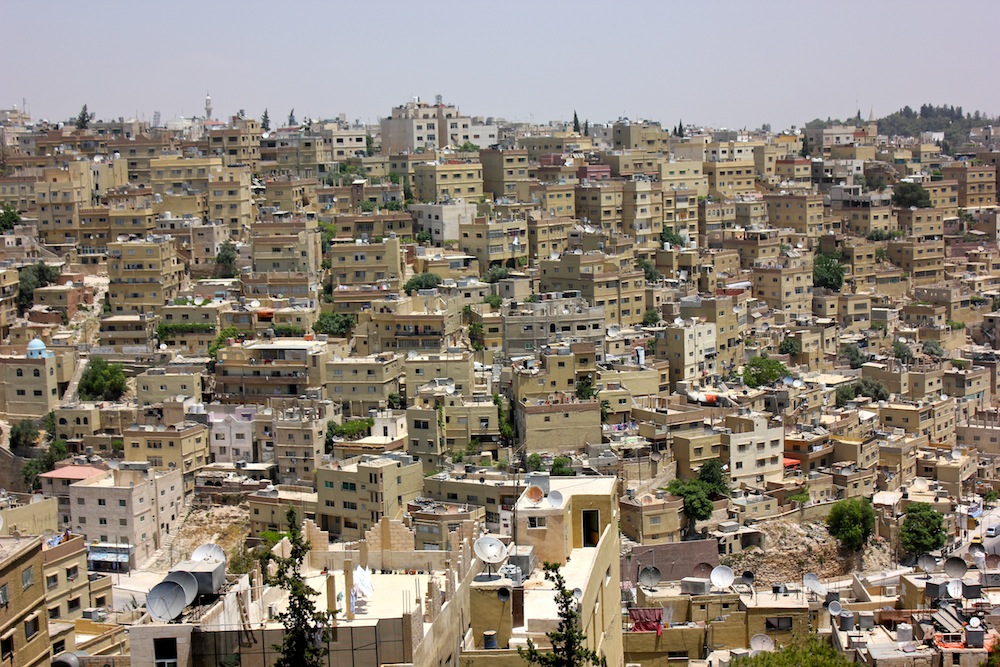
Downtown Amman.
When we traveled through downtown, there doesn’t seem to be a corresponding number of people in the streets. I looked at the houses and thought, “Who are the people living here? Where are they? Where do they work? What do they do?”
On the bus tour, our guide, Akmed, vaguely answered some of these questions, but I was left with so many more. He spoke about several different aspects of Jordanian society, such as education, economy and culture. He mentioned that people were leaving Jordan to go work in the Gulf and bringing money back to Jordan. What does that mean?
En route to the Roman Theatre and the Citadel, our bus passed a mosque where protests have been happening. Akmed dismissed the protests, saying, “I’m sorry, I know some of you are journalists, but I think that journalists, they make something out of nothing.” I wonder, is this how other Jordanians feel? Why do people feel this way?
The tours of Amman and the group dinners are over. We are heading to our host families today and have our first deadlines. I’m ready.
This Plus This Equals Awesome
Throughout our trainings at the SIT Study Abroad Center in Amman, there was one fact about Jordan stressed above all others: collectivism.
“This is a culture of the collective, not the individual,”one of the SIT staff members said.
I heard this being said several times during the day, but I couldn’t feel it. After our wonderful night though, I think I have begun to learn the ingredients to what makes this Jordanian collective society special.
FRIENDS.
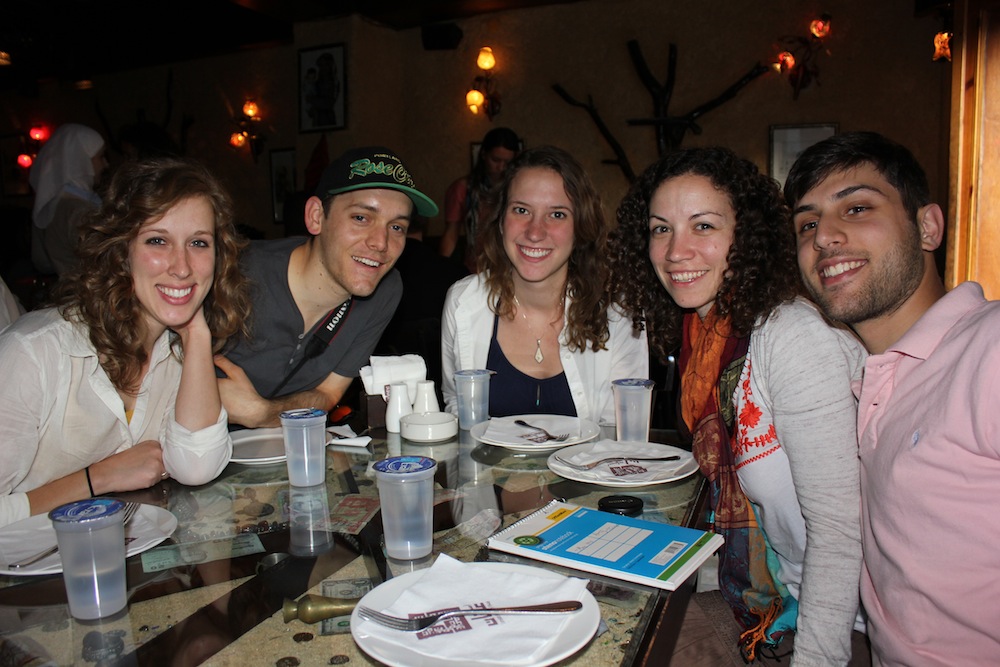
FOOD.
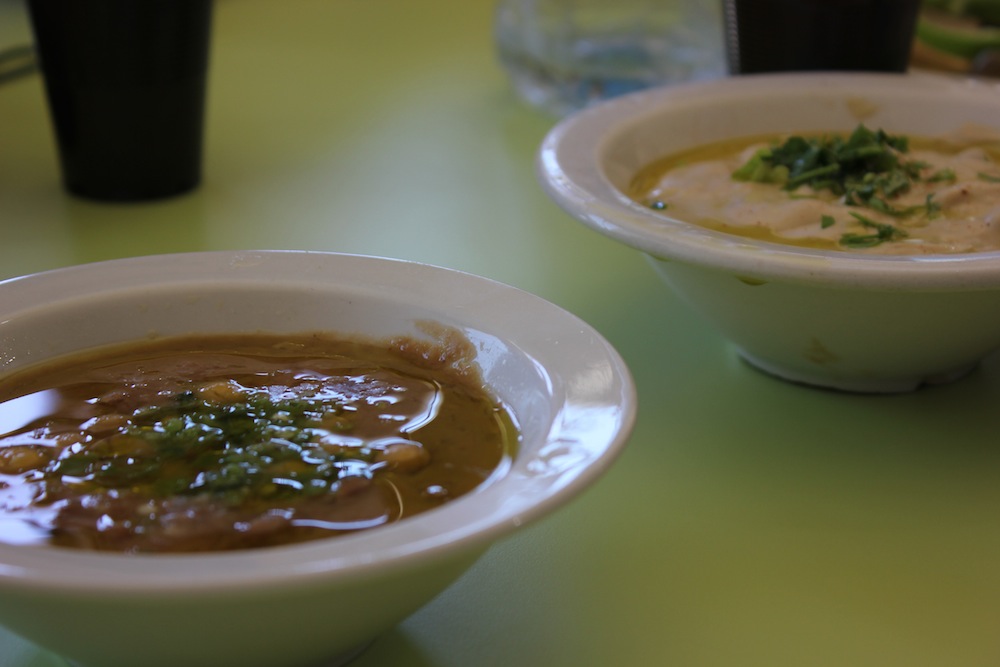
ARGEELA.
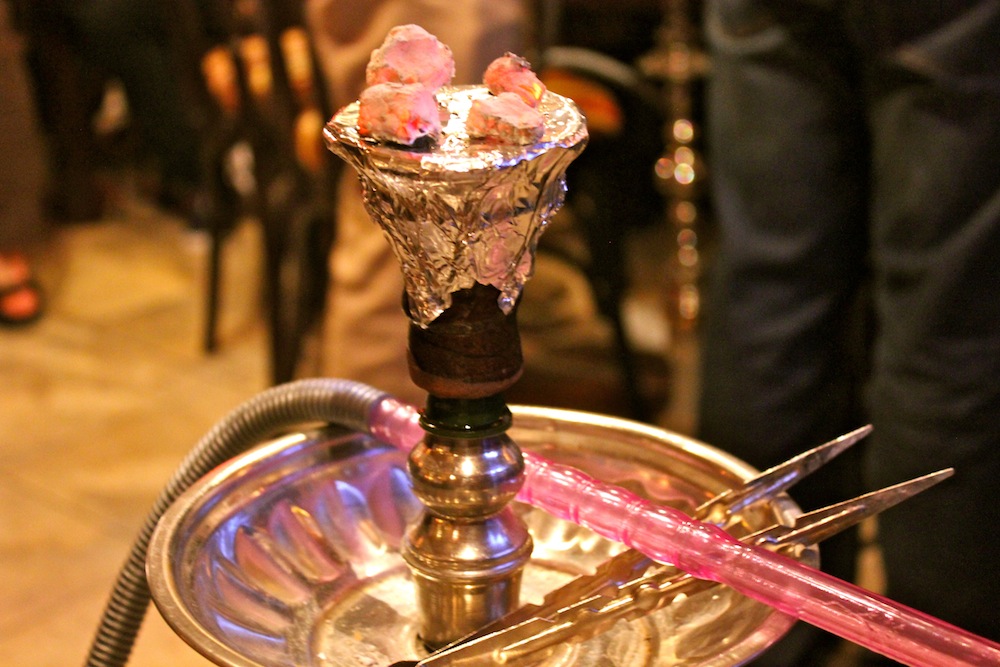
MUSIC.
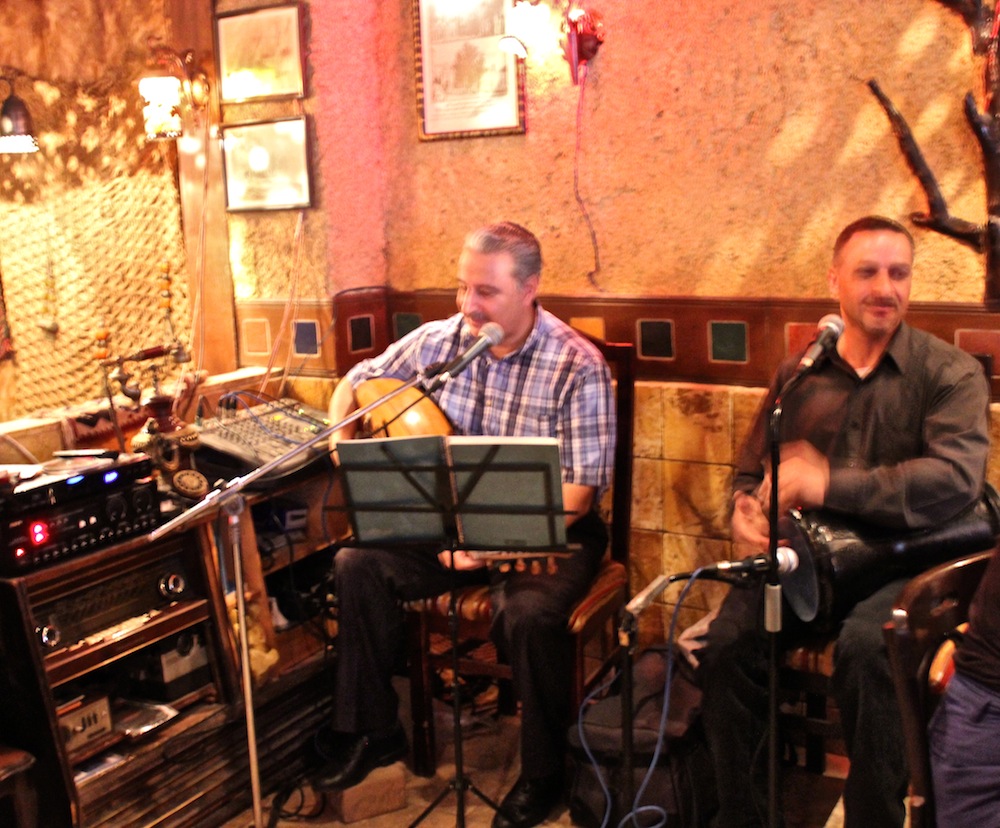
These men, with their music, created an experience that I will never forget. Hokey as it sounds, as I twirled (no touching!) with a Jordanian and joined hands with my fellow travelers and the locals in the restaurant, I felt my first connection to this culture. I failed terribly at following the dance steps in sync, but it didn’t matter — I was a part of something.
Up All Night
It is 3:54 a.m. on Saturday in Amman, Jordan and I have slept for less than 10 hours in the past three days. In my sleep deprived and jet-lagged delirium, I sit here listening to the first call to prayer that I’ve heard since I left Kazakhstan a year and a half ago. The sung Arabic is haunting and beautiful as it echoes through the city streets. I listen from my hotel window, looking out over the sand-colored buildings and their dark windows. Few cars pass on the main road. To think that at this moment, hundreds of people are simultaneously kneeling to the floor and declaring their devotion to their God, Allah, is stirring.
Traveling abroad distorts the mind — you leave your home on a Thursday night and arrive in a foreign land a day later. The jet lag tricks you into forgetting the days and the hours you’re supposed to be sleeping. I feel as if my ride to Boston Logan Airport was months ago. Less than two days ago, I was listening to a baseball game in the park outside my Brookline apartment. This morning I woke up to Arabic.
Leaving On a Jet Plane
I am a firm believer in the overused phrase, “You don’t know where you’re going until you know where you’ve been.”
So with that mantra in mind, I took a break from packing to peruse some of my old journals from the last time I was living abroad, in Kazakhstan.
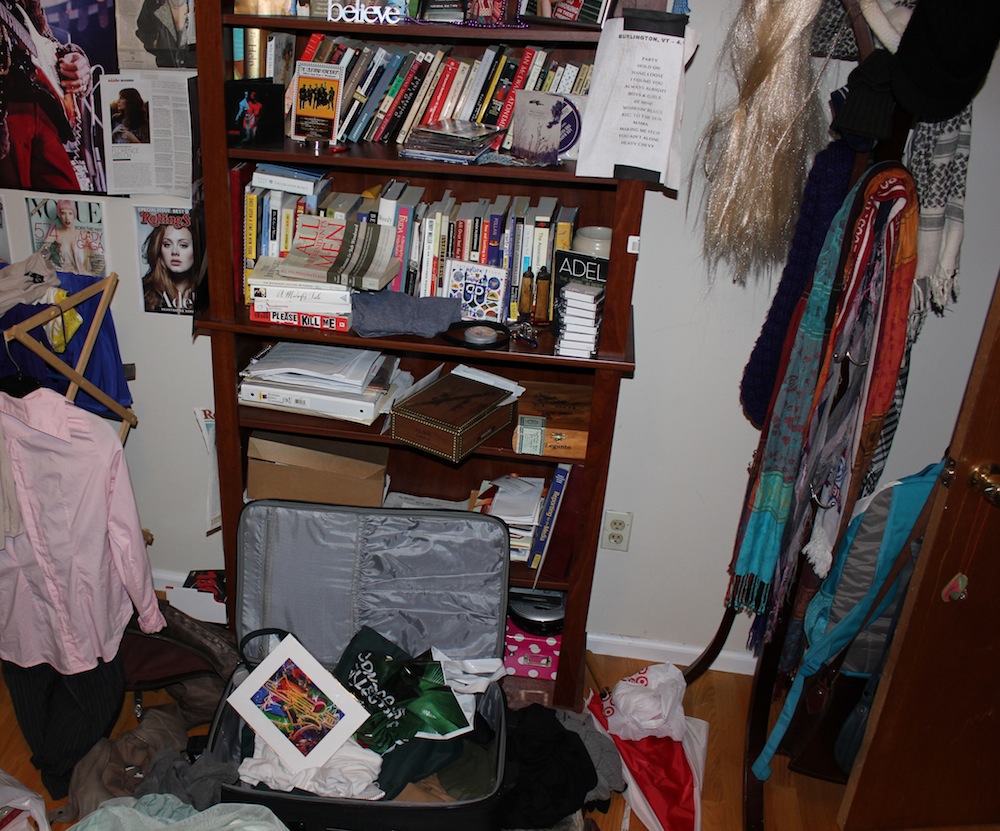
All my bags are pack—wait, no. All my bags are NOT packed. Hello chaos.
As I read through the pages, I vacillated between bittersweet laughter and utter relief that I no longer had to deal with some of the issues I struggled with while I was living in the Kaz. More importantly though, my writing reminded me of how wonderful living in another country can be — how every day is filled with so many wonderfully odd moments. It also reminded me that some days, no matter where I am living, I still write the same things:
I remember copying down a quote from Nathaniel Philbrick’s In The Heart of the Sea — The Tragedy of the Whaleship Essex that reminded me how difficult it can be to understand a country well enough to write about it for other people.
“In Moby-Dick Ishmael tells of seeing the skeleton of a sperm whale assembled in a grove of palm trees on a South Pacific island. ‘How vain and foolish,’ he says, ‘for timid and untraveled men to try to comprehend aright this wonderous whale, by merely poring over his poor attenuated skeleton…Only in the heart of the quickest perils; only when within the eddying of his angry flukes; only on the profound unbounded sea, can the fully invested whale be truly and livingly found out.'”
I am certainly going to do my very best to learn Jordan quickly enough to do the country and her people justice in my reporting. I hope you will all follow along with me on my journey, as I learn life in the Middle East.
I’m leaving today.
Airborne Again

“Travel is like love, mostly because it’s a heightened state of awareness, in which we are mindful, receptive, undimmed by familiarity and ready to be transformed. That is why the best trips, like the best love affairs, never really end.” — Pico Iyer
I need travel to occasionally shake myself from the waking sleep that consumes me when I am just trying to get through the day. Jordan, country of sand and a million nuances, I am looking forward to waking up under your 34,445 square miles of unfamiliar sky.
 look up