I’ll Take You To The Dead Sea
A creative pick-up line one of my fellow students was fed by a Jordanian journalist who thought she was b-e-a-yootiful was, “I’ll take you to the Dead Sea.” It clearly being a place of romance and beauty, I was really looking forward to seeing the famous body of water yesterday.
It did not disappoint. We first stopped in Madaba — a city with a population of about 60,000 located about 30 miles southwest of Amman — known for its mosaics from the Byzantine era. We visited the most famous site of these mosaics, at the 19th century Greek Orthodox St. George’s Church.
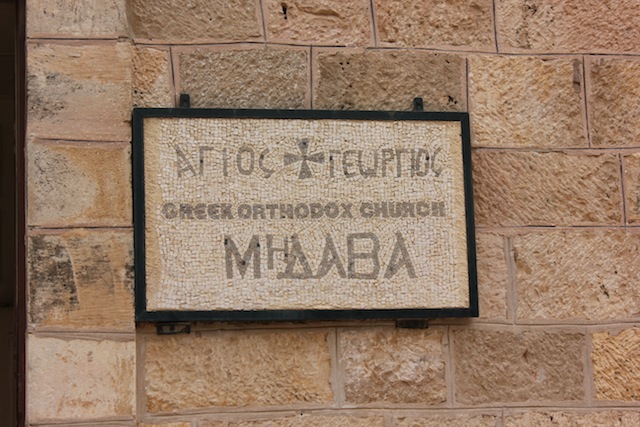
St. George’s Church
Bedouin Vignettes
*Note: If you haven’t read the previous post before this one below, read that one first!
Too much happened this weekend that I learned, that made me laugh, or affected me in some way, to write it all down. I won’t subject my professor and very small audience of family and friends to an overblown piece of writing. Instead, a collection of short vignettes of my favorite moments in the Badia – Tffaddali (here you go).
WAKE UP
- Reach under back of your shirt and grab the bug crawling up your back. “CRUNCH.” Then fling it across the room.
- Ignore Hiyat screaming, “Wejdan, Wejdan, WEJDAN!” every ten minutes from 7 a.m. on to get out of bed.
- Ignore then intensified yelling from Hiyat, coupled with knocking on the window.
- Ignore the rooster crowing directly outside your window.
- When you finally roll off your pad, you must do the Bedouin stretch or else your body will atrophy as you sit on your arse/sleep for the remainder of the day.
THE BEDOUIN WWF
My favorite part of this experience was witnessing the family dynamic. I can now say I’ve found Bedouin Tabeeks. In this small tribe, violence equals affection. Uncles, aunts, cousins, grandchildren and family friends drifted in and out of the house, wrestling and smacking each other endearingly. After Hiyat smacked her youngest brother’s butt as he was leaving, he grabbed her masap and wrestled her to the ground. Hiyat must have known what was coming next because she hid behind Sam as her brother left, then ran back in, grabbed the water bottle out of her hand, and emptied it over her head. Where are these conservative and serious Bedouins we heard about?
Welcome To The Badia – Meet The Family.
*This blog was written on May 24, 2012
Our program set up a weekend with a Bedouin family in North Badia here in Jordan. We left at 9 a.m. and it took more than four hours to arrive at our host’s home in the village of Mukayfita, a place where when you’re here, you’re family. No, really — everyone is related.
Sam and I knew as soon as we got off the bus, we had landed with yet another silly family. Our host mother, Hiyat, is a 44-year old who looks much older than her years, with a cheerful brown, weathered face. She wears a flowing maroon thobe with tiny gold spots and her matching pointed head covering, a masap, framing her knome-like face. When we were dropped off by the big, yellow SIT bus, she immediately started yelling for someone at top volume (probably Wejdan) in Arabic as we followed her through a slanted metal gate and a dusty yard occupied by chickens, rooster, and sous, chicks.
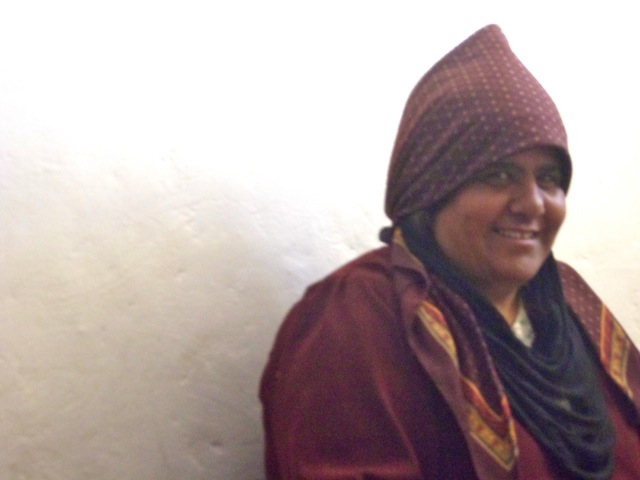
Hiyat!
First Mansaf, Then Obama.
Today in the midst of daylong interviewing at an organization, I was invited to eat mansaf — Jordan’s national dish — with the staff. Considering myself a pro from my 27 months of eating beshbarmak with my hands in Kazakhstan, I figured this would be a breeze. But, it turns out rice is a bit more tricky than boiled noodles.
I read in the saying “Pride always comes before a fall,” once in a book and it is a mantra I that has proven itself too many times to not be a certainty. My neighbor at the table offered to roll a ball of mansaf for me — I awkwardly tried to shove the whole thing in my mouth and ended up with half of it dropping onto my pants with a nice, oily splat. Luckily, my very messy colleague Matt Kauffman was much worse at it than I, so attention was diverted from me soon enough.
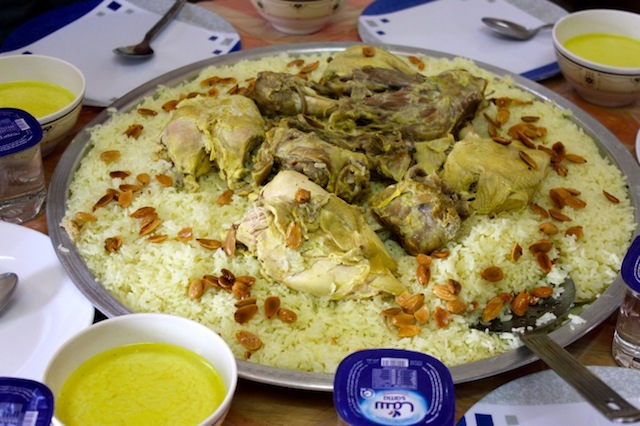
Check It!
The final step before publishing a story after rake-overs by an editor is the deep fact check. In America, checking spelling of the names of streets, landmarks, cities and towns is easy — Hello, Google Map. Including the dates when someone worked at a certain place is readily available as well; in America, we can’t have our resume in enough places. In most cases, particularly for someone who worked in the government, it wouldn’t be difficult to find the dates when they did so.
But this isn’t America. In Jordan, few pay attention to street names. Instead, they use landmarks such as shops, or people’s houses. It’s nearly impossible to find maps online with roads clearly marked in English. And to find dates online for when one of the people I quoted in my story worked for the government — they were simply not there.
After struggling by myself for an hour to check all of the spellings and locations of the people and places in my article, I jumped in a cab and headed to Starbucks to meet one of the student volunteers, Talal, from the organization that we work out of. Talal is my favorite and the helpful local I’ve met so far. He was my translator at the protest and also helped with my some of my interviews as well. We had particular problems when we started checking the spelling of towns from the rough translations we had made together after we left the demonstration – they didn’t exist on Google. We didn’t realize until after much time that because of the way that Arabic translates, the city we were actually looking for was Tafileh – not Altafeleh.
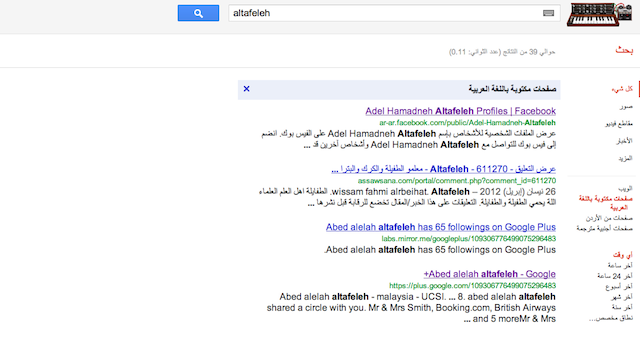
Nope, that’s not right either. Try, try again.
Salt in Photos.
In my previous post, I talked about Salt in terms of locals’ perception of Americans, but I didn’t mention how beautiful the city is or show some of the great shots I got. Here is a small collection below:

The Zoo.
Ready or not, here we come, Salt you can’t hide (even if you want to). This is the entrance to Hammam Plaza, the “oldest commercial area in Salt.”
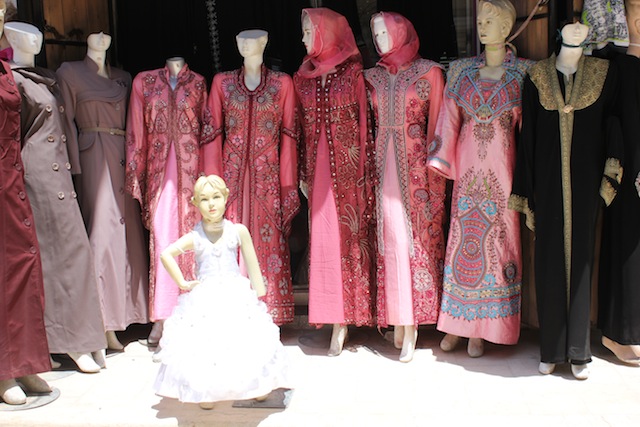
Some traditional Jordanian clothing and a bizarre mannequin.
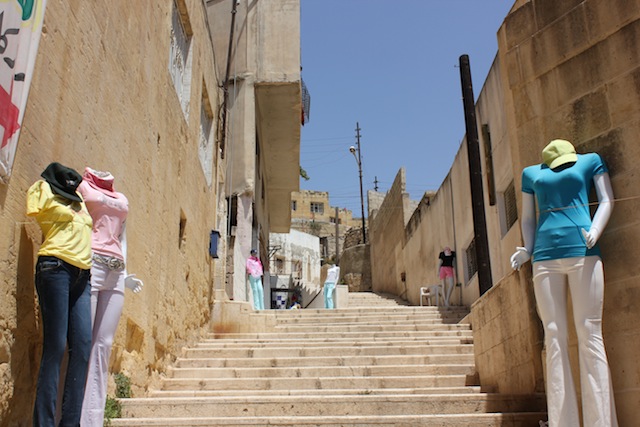
An interesting way to display wares.
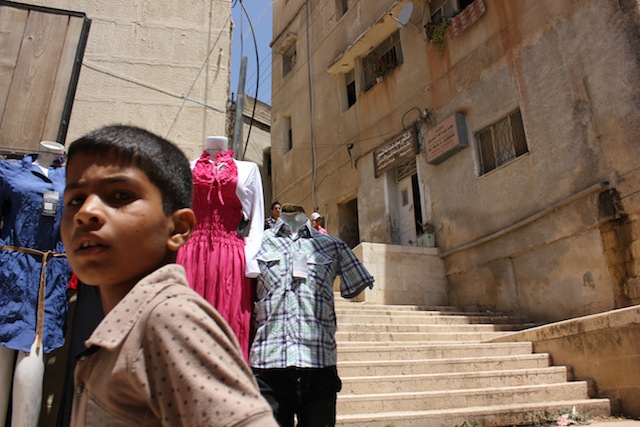
Taking photos on the fly.

We went to a few different museums in Salt, this one had the traditional wedding dress on display.
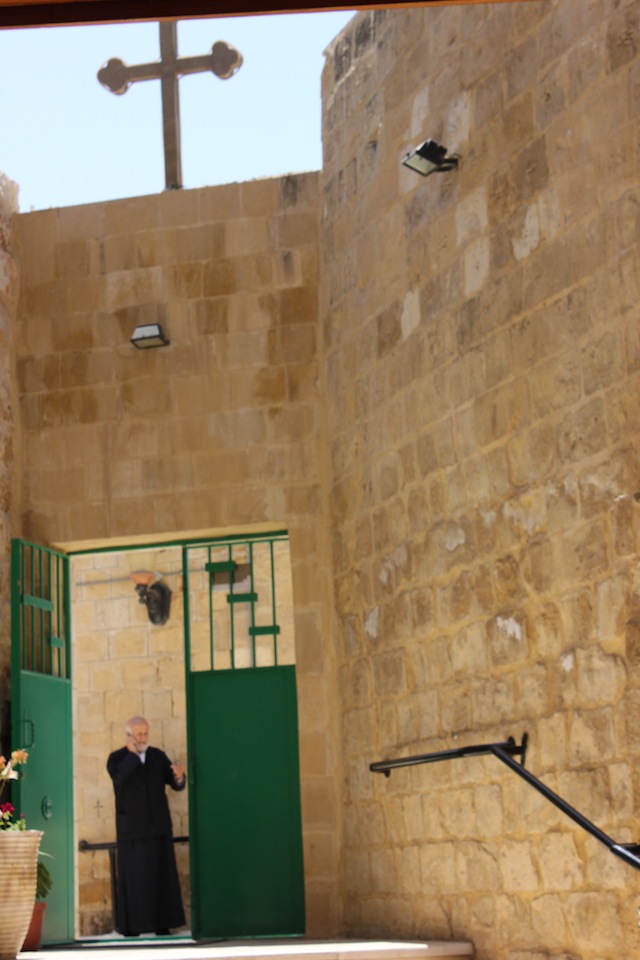
At St. George’s Church, Marwan Ta’amneh told our boisterous group about the miracles he’s experienced in his many years working there. He was working in the military before he was “called by God” to serve.
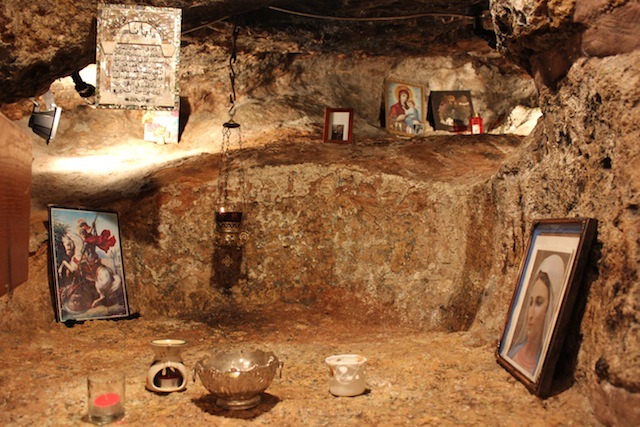
Marwan Ta’amneh told us about this grotto, which sometimes exudes water and oil.
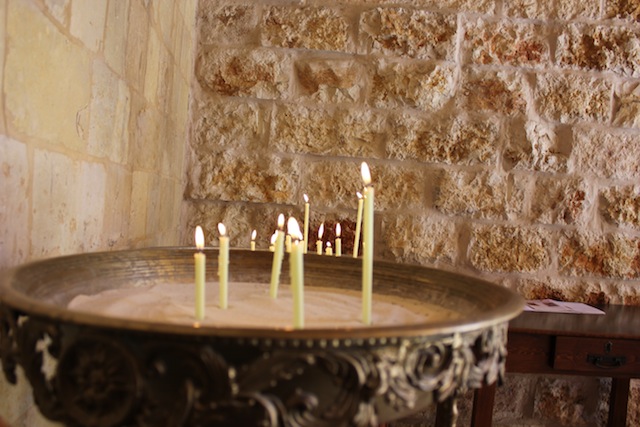
Candles burning in the sand.
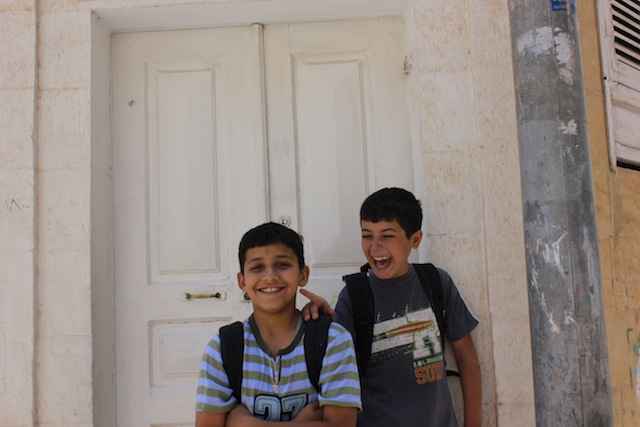
Some boys we met on our walk that chatted Matt up about the WWF (World Wrestling Federation) Can you smell what the Rock is cookin’?

Oh, my. Obsessed with this delicious, sludgy Turkish coffee.
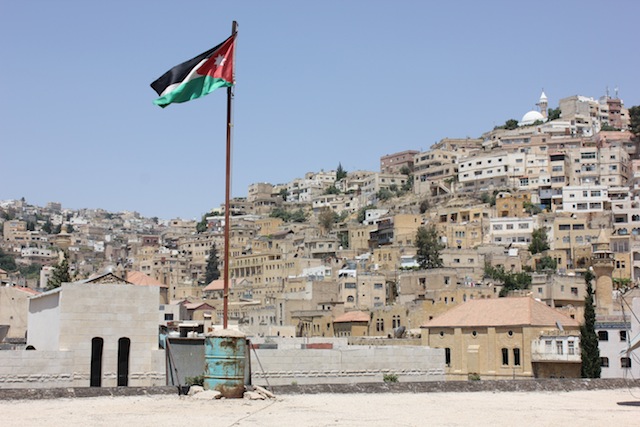
I’ll never get tired of the beauty of this flag against backdrops like this.

On top of the world (on top of Salt, anyway).
20 Mosques.
I heard the most breathtaking call to prayer — adhan —last night while sitting in a cafe on Rainbow Street (I have a like-hate-loathe relationship with this road, which is a slice of the West in Amman). I sat with three friends while the prayer rang out from at least twenty different mosques in the distance and across the hillsides surrounding downtown Amman.All of the mosques in Amman give the call to prayer at the same time, synced up with King Abdullah I mosque; the combined song was incredibly affecting.

The view from the restaurant.
A Day at the Zoo.
Yesterday our enormous group — “The American Zoo” — went to the city Salt, about 20 miles northwest of Amman. It is a beautiful city of steep grades, and rooftops so close together in places, you can walk from one to the next. It’s a more conservative city than Amman, particularly compared to the area our “home base” is located in — Abdoun — which is swanky and somewhat Westernized.
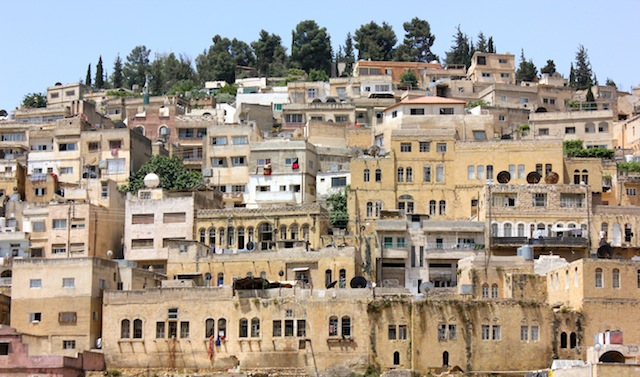
Rooftops in Salt, Amman.
Because it’s more conservative, I was particularly sensitive to how we were being perceived in the eyes of the locals. I cringed as loud American voices rang out through the streets wherever we walked in our pack of 50, local men agog at the amount of skin and body exposed by the women passing.
When I lived in Kazakhstan for two years, I was integrated enough in the culture to know exactly what the local people were thinking when foreigners acted in a way that was disrespectful. They forgave it though, and nearly always pardoned the Americans because of this fact: they expected it from them. I would be a rich woman if I had only a dime for every time I heard something like this from a local: “It’s okay, they are American, so they can do what they like.” Last night, my host mother echoed this sentiment when I told her about our trip. I don’t think it’s difficult to imagine what the women in Salt might have thought of our crowd yesterday.
The thing is, even if it’s forgivable and expected, I don’t think any of my colleagues came here to be cute pandas or knuckle-dragging gorillas; I would expect and hope that we all came to be learners of a culture and to absorb the essence of life in a country that is so different from our home.
“Someone told me
It’s all happening at the zoo.
I do believe it,
I do believe it’s true.
What a gas! You gotta come and see
At the zoo,
At the zoo.”
Trying to Find Sources in Amman – A Series of Haikus
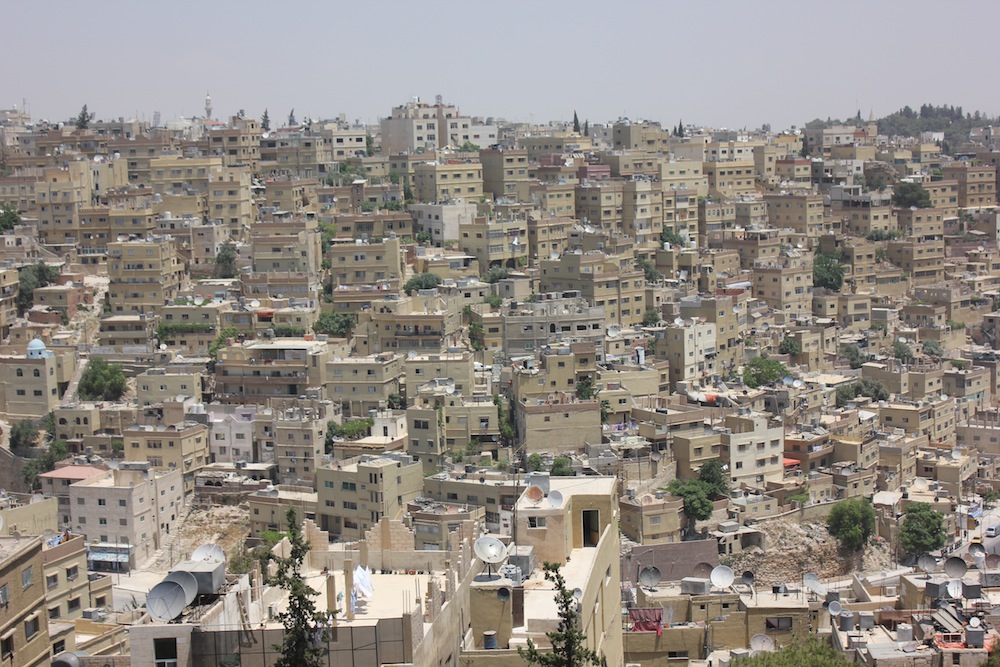
Somewhere, out there, is my long-lost source…
—
I dial the phone
No one answers while it rings
Why won’t you call back?
—
Sweat pours down my face
Folds of fabric suffocate
This sweltering cab.
—
The streets choked with cars
Hear Arabic beats booming
I am late and standing still.
—
Searching for some English
Desperately asking “Do you know?”
Finally, one – she says “Yes.”
—
You say meet at one
He says I will try, maybe.
Interview cancelled.
—
Try to learn language
Try to learn the culture norms
Then, there is success?
Cigarettes and Sage
After spending a fair amount of time conducting phone and one-on-one interviews in the United States, I have gotten used to the often formulaic process of hooking up with a new source: find the contact online or through another source, get their information from the computer and set up a time to talk, either on the phone or through email. But as I begin interviewing people here in Amman, Jordan, I’m starting to realize how radically different international reporting is.
First – people don’t respond to email. It’s difficult to find contact information online and it’s easier to find someone by just showing up to their office rather than trying to set something up through other channels. In my search for an expert, I got lucky and caught the professor I needed on my first phone call.
We set up the interview for the next day. My cab ride to his office began by me handing my phone to the driver with the professor on the phone to give his address. It was my first solo cab ride, which didn’t really rattle me, but I was a little nervous about my first interview with a local. The ride was long, hot and loud. The driver listened to a radio program at a deafening volume, while young guys with slick black hair ripped past blasting Arabic rap.
 look up
