From snow to slush.
A few more photos from winter fun today as the snow melts and my roof empties, drop by drop, into my house. There was a fun, holiday feel to the day as young kids gloved with ziploc bags tossed snow at passing cars and people, and spontaneous snowball fights broke out in the street.
Today, upstate New York doesn’t feel so far away.
First Snow in Jordan
Torrential rain, hail, extensive flooding and now over a foot of SNOW!
This snowstorm that has hit the Middle East is the worst in years. At least eight people have died across the region and Syrian refugees throughout the region are suffering terribly.
Despite tragedy, last night and early this morning, there’s a feeling of excitement in the air. People are having snowball fights across rooftops today and last night, there were men slipping and singing as they walked from downtown Amman.
Stay tuned for more photos throughout the day.
Happy New Year.
I always get nostalgic on New Years Day. I like to comb through photos, videos and journals from the previous year, usually in search of the reason why I, yet again, broke my resolutions.
After watching YouTube’s amazing video recap of 2012 above, I was inspired to make a version (undoubtedly less impressive) of my own 2012. A little cheesy, but fun, and a good distraction from the actual work I should be doing. And there goes my resolution to be more focused. Oh well.
From reporting on Rick Berlin and all his musical endeavors in Jamaica Plain, Massachusetts to politics, protests and refugees in Jordan, I’ve met some beautiful people this year and I’m so grateful for the opportunity to have done so. Happy 2013!
Christmas in the Middle East
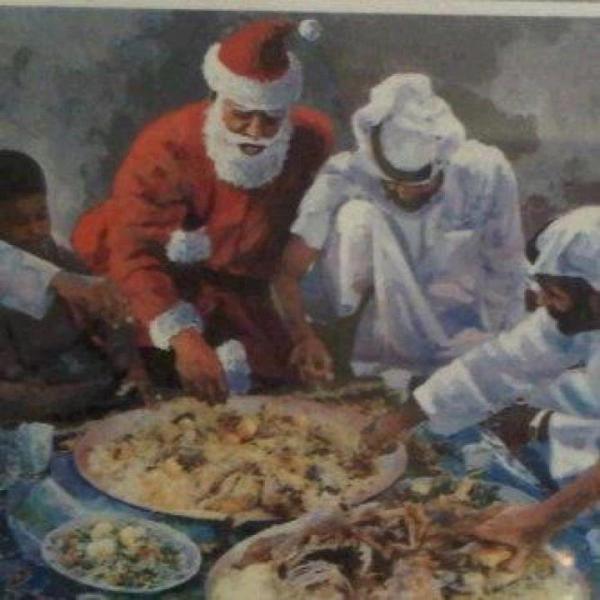
Another Christmas abroad comes and goes. Holidays outside the U.S. are always a memorable experience because in every new place, I’ve had to find a new way to celebrate. The picture above is a misleading – no, I didn’t dress up as Santa Clause and eat mansaf. Neither did I eat mansaf with Santa Clause. But I did discover that being a journalist can be helpful in searching out holiday fun.
I was looking for Christmas in Amman, not only for a short piece, but for my own love of everything related to the holiday. Drawn by the plethora of decorations out front, I was lured into the La Parisienne cake shop, where I stumbled upon the taste of Christmas. Oh my yum.
What struck me most about this bakery though was not that the candy canes tasted like it came out of a Wegman’s box. Neither was it that the inside of the shop looked like home. But instead, it was the owner, Chef Moammar Al-Absi, who inspired me. He talked about his love of making sweets for Christmas, and all other special occasions as well, with a passion that was tangible. Absi explained the different types of cakes that he makes with a broad smile on his face and a detectable excitement in his voice. Photographer Omar Alkalouti captured this in his photo.
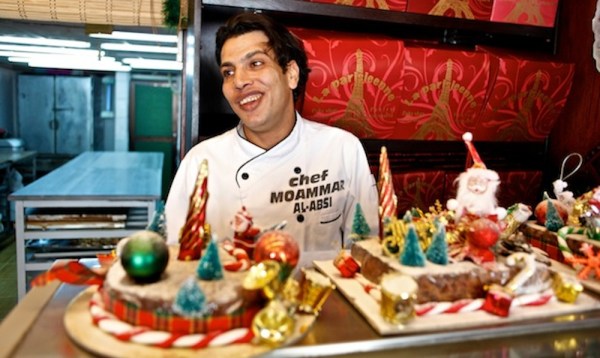
Chef Moammar Al-Absi displays Christmas cakes in his bakery, La Parisienne, in Amman, Jordan.
(Also, if you click on the photo, you can find the story I contributed to on Christmas in the Middle East!)
He has been cooking since he was 14 years old. After all those years, the 31-year old finally opened his own bakery almost two years ago, and is now successful and able to follow his dream of being a baker. Thanks to Chef Moammar Al-Absi, I am reminded of why I came to Jordan, and what I want most in 2013: to keep discovering inspiring stories and finding a platform to tell them on.
Merry Christmas.
New Arab Debates in Jordan
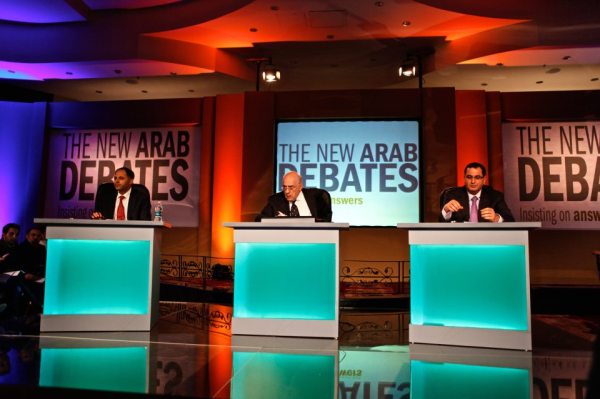
(From left) Dr. Hassan Barrari, moderator Tim Sebastian of the BBC and Salaheddine Al Bashir participate in a rare public dialogue between government support and opposition on December 10 at the Landmark Hotel as part of the New Arab Debates in Amman. Photo credit ©Omar Alkalouti
For two consecutive evenings on December 10 and 11, the New Arab Debates came to Jordan for the first time to facilitate rare public discourse on the motion “This House believes Jordan is on the brink of serious political turmoil and unrest.”
The first night of the debates was held in English, where 54 percent of the audience of more the than 150 attendees agreed that Jordan is on the cusp of serious and possibly volatile changes. Moderator Tim Sebastian of the BBC pushed political science professor and newspaper columnist Dr. Hassan Barrari — who was “for” the motion — and former Minister of Justice, Trade and Foreign Affairs Salaheddine Al Bashir — who was “against” — to answer both his questions and those asked by the crowd. The audience was a diverse one, ranging from university students and protestors to high-level diplomats and attachés.
Dr. Barrari cited corruption, cronyism, nepotism, a lack of serious electoral reform and political policies that work against the most vulnerable in Jordan as indicators of the disturbance that is to come to the country.
Dr. Barrari also pointed to the King’s constant changing of political appointments as a major factor in eroding the trust people have in the legitimacy of their vote.
“The King changes governments as fast as he changes his knickers and this is a sign of political instability,” Dr. Barrari said.
Arguing against the motion, Bashir countered Dr. Barrari’s charge of illegitimacy by pointing to the strength of Jordanian institutions, which largely contributes in keeping the country away from “the brink.” Bashir also said that the people in the streets do not represent the desires of Jordanian citizens.
“Jordanians are moving from protests to process,” Bashir said.
Much was debated on the topic of electoral reform as well, which comes a little more than a month before the scheduled January 23 parliamentary elections. While Bashir said change relied on, “me as a citizen,” to exercise the right to vote, many in the crowd didn’t agree. When moderator Sebastian asked the audience who would not be casting a ballot, nearly half of the room put their hands in the air.
One audience member in particular addressed this issue in his question put to the two debaters. The middle-aged Jordanian citizen explained how he brought his parents to vote in the last election, but he has since lost faith in the government and the process.
“I voted three times. In the last election I took my parents and we voted for the parliament that elected the government…This government was fired 45 days later that was elected by the parliament that was supposedly elected free and fair by the public, what do you tell me that this time, for the fourth time, I have to waste two dinar to go to the police station to vote and that this is going to be different,” the man said, continuing with a question for Bashir,”And once the new election is done, and the new parliament comes in, what is the government going to do the next day after the people realize that these are the same faces that are going to be in the same seats talking the same things?”
The consensus at the end of the night didn’t change much from when it started. The audience was still deeply divided and as the survey showed, few changed their minds whether they believed Jordan stands as a country on the edge of change and chaos.
Dr. Barrari said that the January 23 elections are the “end game.” Bashir countered that there is no united pressure by the public in Jordan. It seems, per usual, that the people and the rest of the world must wait a little longer to see what will happen in this country.
Children of Zaatari
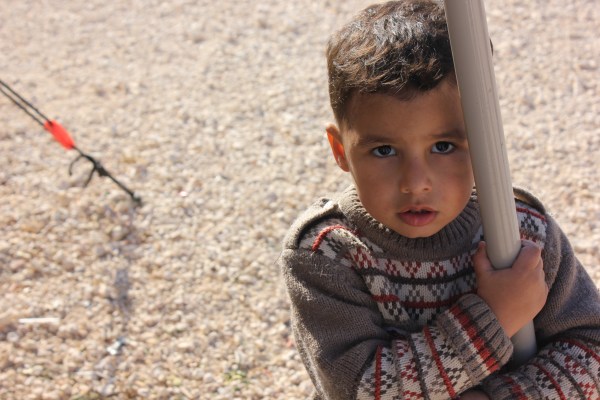
Jordan’s Zaatari refugee camp in the northern town of Mafraq now has about 45,000 registered inhabitants, though some camp officials estimate the number to be closer to 30,000, due the number of Syrians that sneak out of the camp, go back to Syria or legally leave with the help of a Jordanian sponsor to live in the country. Over half of them are age 17 and under.
When you walk through that camp of thousands, inevitably you will see children everywhere. You may even be followed by groups of them, begging for you to take their photograph. I was. During the many days I have spent in Zaatari over the past month and a half, I often think of those children and something a Syrian mother said to me in September: “This is a generation that is being ruined.”
I understand what she means. These children’s lives have been uprooted, their schooling disrupted. They’ve lost uncles, aunts, fathers, mothers, brothers, sisters. They witnessed things that children should never have to – family members killed in front of their eyes, snipers on their walk to school, houses bombed out, tanks in the street. They’ve hidden in underground shelters for days at a time and for those that are now living in Zaatari, experienced a terrifying journey from their homes in Syria to Jordan. “We prayed to God to give us a safe passage to Jordan,” two young sisters told me of their crossing the border.
Though the trend of Zaatari arrivals shows there has been a dramatic decrease in the number of Syrians coming to the camp from Syria from the highest in August and September, the continued fighting and violence promises sustained flow of refugees into Jordan, as well neighboring Lebanon, Turkey and Iraq.
These children embody the spirit of true resilience. I have been inspired by their strength and their ability to adapt to life in the camp. Spending time with so many kids in Zaatari gave me hope that this isn’t a generation being ruined, but rather one under siege that like many of the children, will emerge stronger. I admit, it’s naive to think that the war won’t have a lasting impact on their ideology. That it won’t make them hard. That the trauma hasn’t changed their personalities and the people they’ll become forever. That this war won’t cause young people to be filled with hate, anger and vengefulness.
The human cost of this war has been so high. But I have faith in this generation to overcome, though I know it’s no easy task. In Zaatari, before the children overcome the damage that the war has caused them, they must first make it through the impending winter.
It’s clear there will be no easy road back to a normal life for these kids – even when one has been cleared of Syrian regime forces.
Live in Dignity or Die
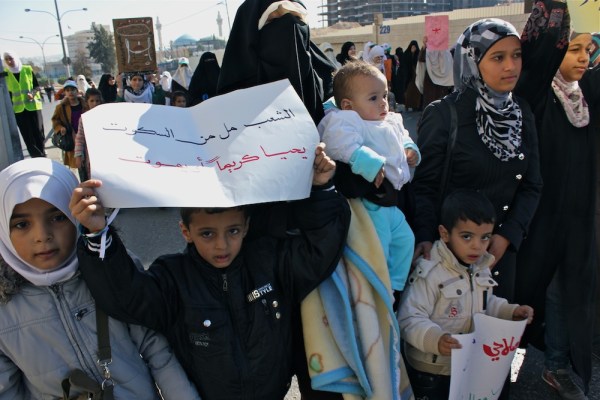
A family protests among the thousands who came out today to call for regime reform. The boy holds a sign that reads the same as a chant that rang out in the streets, “The people are tired of silence, live in dignity or die.”
Thousands gathered yesterday between Firas and the Interior Ministry Circle to protest against the rise in fuel prices, government corruption, Prime Minister Abdullah Nsur and to call for regime reform. Unlike two Fridays ago when demonstrators called for fall of the regime, most of the chants at yesterday’s protest focused encouraging Jordanian citizens instead to speak up for reform and fight the dramatic increase in the price of gas.
I followed a crowd of about 1000 who marched from the well-known King Abdullah II Mosque to meet the other demonstrators, which included Islamists, leftist groups and discontented citizens, to make their voices heard. Signs and chants encouraged Jordanians to express themselves: “The people are tired of silence, live in dignity or die.”
Though near the end of the protest, there was palpable tension as hundreds gathered where riot police were lined to block any demonstrators from entering the Interior Ministry Circle, the crowd was dispersed peacefully. Hundreds of police were suited up and prepared to intervene if something happened, but it proved unnecessary.
My favorite part of yesterday’s demonstration was to see the mixed demographic of the crowd, particularly in the presence of hundreds of women participated, some with whole families in tow. This protest marked a change, with the location being moved from the usual spot of Husseini Mosque in downtown Amman.
*Because of internet issues, I won’t be posting videos from the protest until tomorrow, but please scroll through the photos below!
-
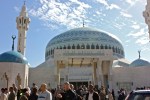
- Protestors and pious alike poured out of King Abdullah II Mosque on November 30.
-
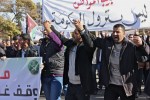
- People gathered to express their dissatisfaction with calls for regime reform and an end to rising prices in Jordan.
-
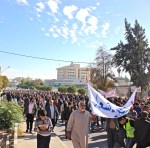
- Hundreds march toward the Interior Ministry Circle.
-
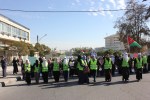
- Hundreds of women and children marched behind the men, many linking arms and waving signs in the air.
-
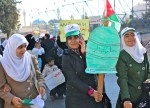
- A female protestor holds a creative sign to show her dissatisfaction with the increase in gas prices.
-
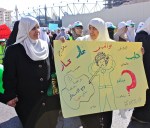
- A sign that conveys the idea, “What is a person in Jordan to do?”
-
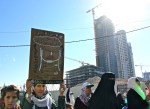
- A young woman holds up a sign as she passes the still unfinished Jordan Gates.
-
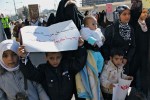
- A boy holds a sign that reads the same as a chant that rang out in the streets, “The people are tired of silence, live in dignity or die.”
-
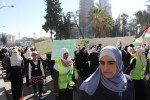
- Women of varying ages protested together.
-

- Many women were in the street with their children in tow as they called for reform and change in Jordan.
-

- Women and men were marching separately, but both simultaneously chanting together.
-
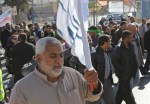
- A man marches alongside hundreds of other protestors demanding reform.
-
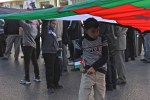
- A young boy stands under a long Jordanian flag that is being waved by several protestors.
-

- Men and women of all ages came out to the street to voice their grievances with the Jordanian government.
Protests in Jordan of a Different Kind
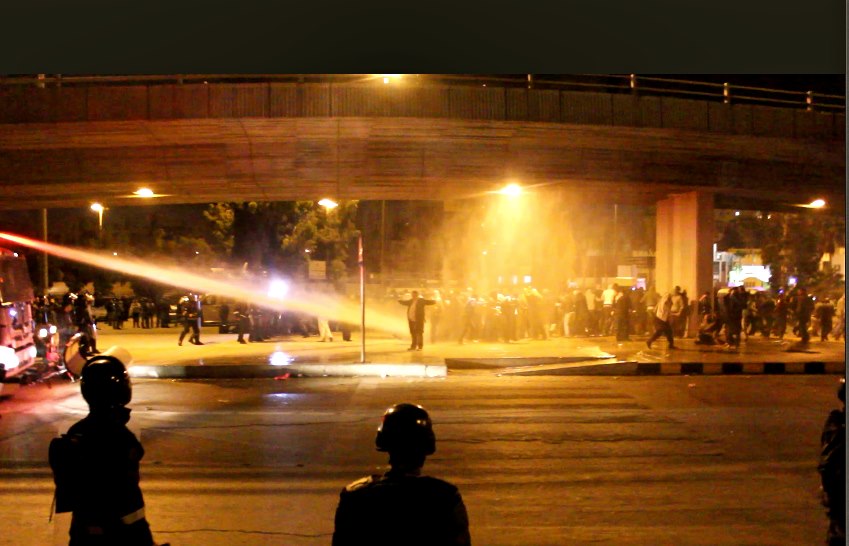
I’ve been lax on blogging in the past couple of weeks, but in my defense, I’ve either been in Jordan’s Zaatari refugee camp or chasing the protests in Amman that began almost a week ago in response to the dramatic increase in fuel prices that went into effect at midnight last Wednesday. I’ll be posting a separate blog in the next few days with Zaatari stories and photographs, but this one will be dedicated to the demonstrations that have erupted throughout Jordan in the past six days. I usually don’t post long blogs because I’m mindful of people’s attention spans, but bear with me, because I’m trying to cram in six days of action. I attached the photographs here for the people I know won’t read all the way down, but please do!
The first protest began Tuesday night on November 13 around 8 p.m. in Dakliyeh Circle, outside of the Ministry of the Interior in Amman when it was announced that fuel prices in Jordan would jump over 50 percent for cooking gas — 6.50 Jordanian dinars ($9.18) to 10 ($14.12) for a single gas cylinder — which is also what many Jordanians use to heat their home in the winter months. There was also an increase up to 33 percent in diesel and kerosene fuel. This is a measure that Prime Minister Abdullah Ensour has said is imperative to taking steps to deal with the $3 billion deficit in Jordan’s budget.
The Tuesday night protest continued into the early morning on November 14, where protestors stood together surrounded by riot police in the Interior Ministry Circle in Amman. The hundreds of police numbered among the thousands of protestors that called for freedom, democracy, and even chanted for the ouster of King Abdullah II, a crime that is punishable by up to three years in prison. There was almost a festive feeling in the air that mixed with the dissent and unprecedented chants in Amman, with families building fires to warm themselves against the chill of the night and other protesters joining arms and doing the dapka while they rallied for change.
As the night worn on, many of the demonstrators left, until around 5 a.m., when there was only a small crowd of about 50 men remaining. There was a palpable feeling that something was about to happen as men finished the first prayer of the morning. Minutes after, the crowd was dispersed by the riot police with a water cannon. The men fled and were chased down by police, which you can see in the video below. Also attached here are several photographs taken during and after the protest by Omar Alkalouti, where you can see some close-up shots of arrests occurring.
The protests throughout Jordan have continued since then, some of which have turned violent. On Thursday, November 15, a group of hundreds of protestors tried to march to the Royal Court, but were stopped by riot police, who fired tear gas repeatedly until the crowd had finally dispersed. There were also people throwing rocks at protestors (ergo, me) from the left side of the road, perched high on the hills where many apartment buildings sit.
Friday’s protest at Husseini Mosque in downtown Amman, the long-standing site of weekly protests, numbered in the thousands as there were again unprecedented calls for the end to King Abdullah II’s reign. The crowd chanted slogans such as “Freedom, freedom, Down with King Abdullah” and “Qaddafi, Ben Ali and Mubarak all left, Abdullah, go, go.” I could see how shocking this was when immediately upon entering the throng of people, my translator kept saying “Oh my god, oh my god,” at the words the thousands of people were shouting against the King in unison.
There was violence later in the night though, in the Al-Nuzha area near Hussein Camp, the oldest Palestinian refugee camp in the city. The hundreds of protestors, mostly young men and boys, gathered first in Al-Nuzha Circle, before charging down the street and marching in the direction of the Al-Nuzha Police Station on Jordan Street. An angry young boy who looked to be about 10 or 11 years old, caused a scene when he saw me taking photographs and video. After being surrounded by several boys, my friend/translator and I quickly moved away from the demonstrators, and our small group decided to catch a cab home.
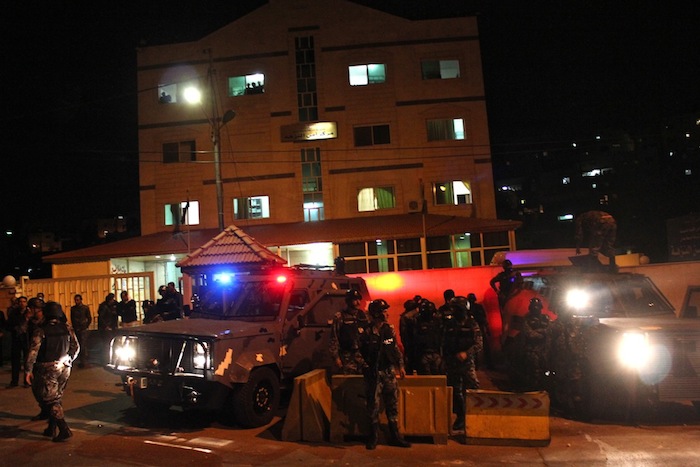
When we got to the police station, we hopped out because it looked like something was about to happen. Indeed it did, because less than ten minutes later, we had to take cover behind a wall. The protest had moved up to Al-Nuzha Police Station on Jordan Street at about 10:30 p.m. on November 16, where rocks were launched at the building and the people in front of it, including regime loyalists — who had been protesting earlier in the evening in a sort of “King’s Parade” in Farrass Circle — in cars in front of the police station, by around 200 people from different areas surrounding the building. Police officers retaliated by charging down the street after them and firing warning shots with live ammunition. Riot police showed up minutes later with two vehicles to shore up the area, before going into the area of the protest at the end of the street to disperse the crowd with tear gas.
One protestor has been killed, in Irbid, and over 70 have been injured. The government has reported nearly 100,000 dollars so far in damage to municipal buildings. There have been over 150 arrests. The military prosecutor has charged 89 activists with inciting revolt, punishable by up to 15 years in prison. I’m not sure how many tear gas canisters have been fired at protestors throughout the country, but the number must be high. The protests continue, including one organized yesterday afternoon by the Professionals Association, where hundreds of demonstrators marched more than a mile to the Prime Ministry offices, creating traffic gridlock for more than an hour.
Different media has put their bets on Jordan, whether they think that it’s a revolt that will pass, or one that will continue to linger. Although the fervor has dwindled, there are still groups of people still protesting and people are still being arrested. To be sure, something has changed here in Jordan. “A red line” was crossed in the people’s public call for the King to step down in such huge numbers, and that is no small thing. I’m not sure if I’ll need it in the coming week, but despite the waning fury in the streets, I’m not writing off the movement and still won’t be going to the next protest without a mask and an onion in my pocket when I walk out the door.
Obama For The Win
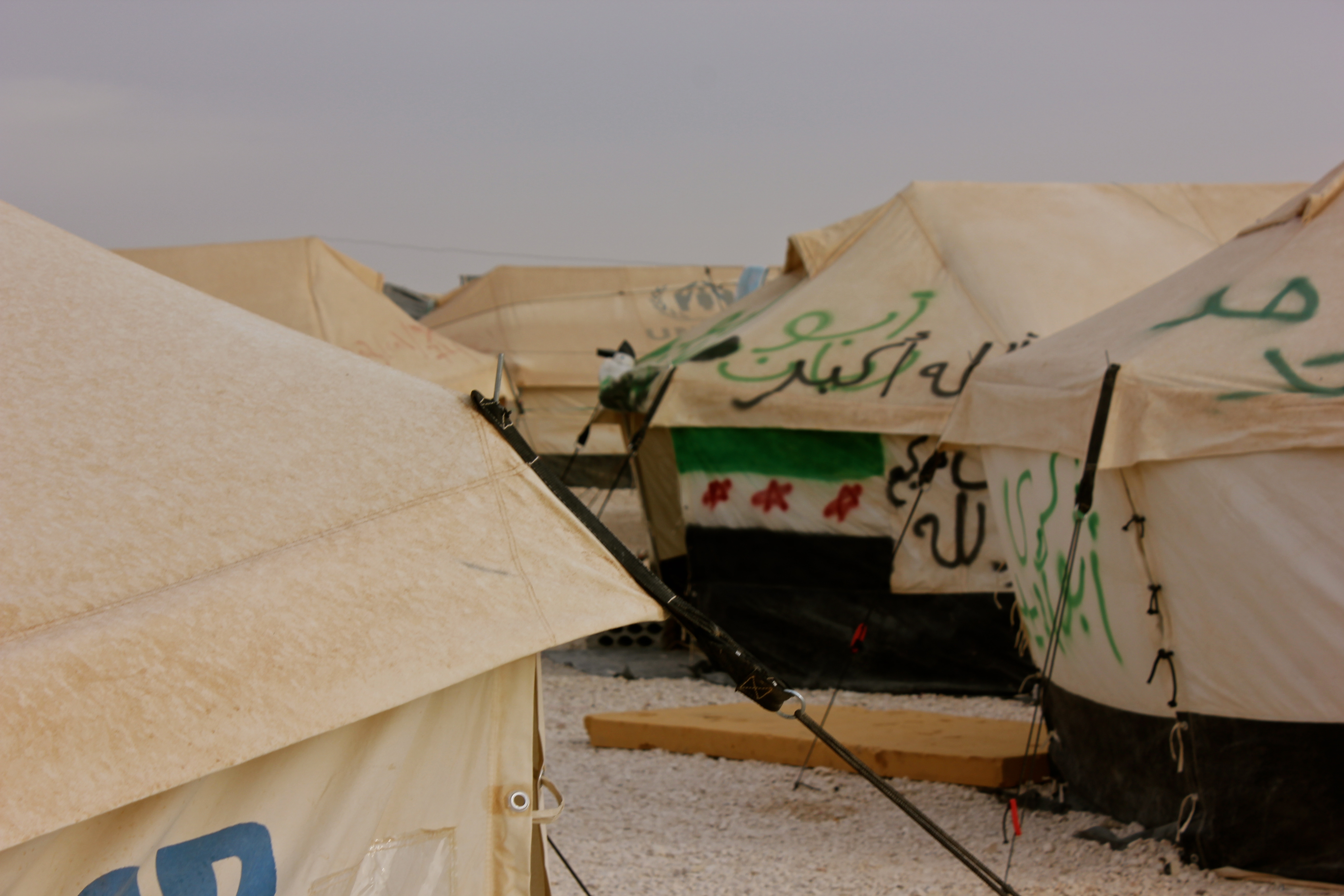
A rarely-seen Syrian revolution flag in Zaatari refugee camp in Mafraq, Jordan.
Since coming to Jordan two months ago, the elections have been a frequent topic in conversations. Particularly in the Syrian-centric reporting I’ve been doing, who would be the next President of the United States weighed heavily on the minds of these mostly disappointed in American policy people. Though throughout Romney’s campaign, he looked to be more willing than Obama to arm the rebels, many Syrians I spoke with still placed their hopes in the current president, whom they hoped would enact stronger policies in support of the Syrian opposition if reelected and thus inspiring the international community to do the same.
A great deal of the other people I talked about America’s presidential election with in Amman were either indifferent, stating that one president or the other really makes no difference, or were pro-Obama. Though President Obama has disappointed many in this region after a promising start in Egypt in 2009, he was still the choice of many here. Even at a ministry in Amman yesterday, employees expressed their support for him. “Obama!” they said, with a wide grins.
Now that President Barack Obama has officially been reelected for a second term, it’s time to get back to work. I hope that the people who support him here in Jordan haven’t misplaced their hope in him to make real changes in policy in the Middle East in the next four years.
Forward.
Eid al-Adha Comes to an End
As the Eid al-Adha holiday comes to a close, I have to say that I’m pretty pleased with how I was able to celebrate here in Jordan. I got to witness the early morning prayer to begin the holiday at a demonstration for Syria against President Bashar al-Assad across the street from the Syrian Embassy in Amman. I was able to give my cousin a taste of the Jordanian hospitality I enjoy on a daily basis via a visit with my old host family the first day of Eid. I spent two afternoons at a livestock market watching sheep get sacrificed. Grabbed a couple of horns. I spent a couple of days at the Zaatari refugee camp as well, and saw their lack of celebration. Many echoed the statement, “there is no Eid until we go home.”
Also, I wrote a piece for Your Middle East on Eid al-Adha and how the meat gets from the pen to the table. The photographs, shot by Omar Alkalouti, are a tad gruesome, but it’s really interesting to learn the nuances of the process. Click on the photo of me and Iad below to read the linked story.
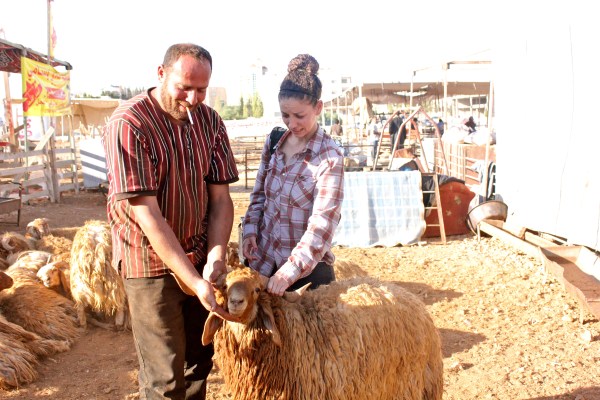
Me and Iad Zoube in the pen.
 look up
