With Love From France
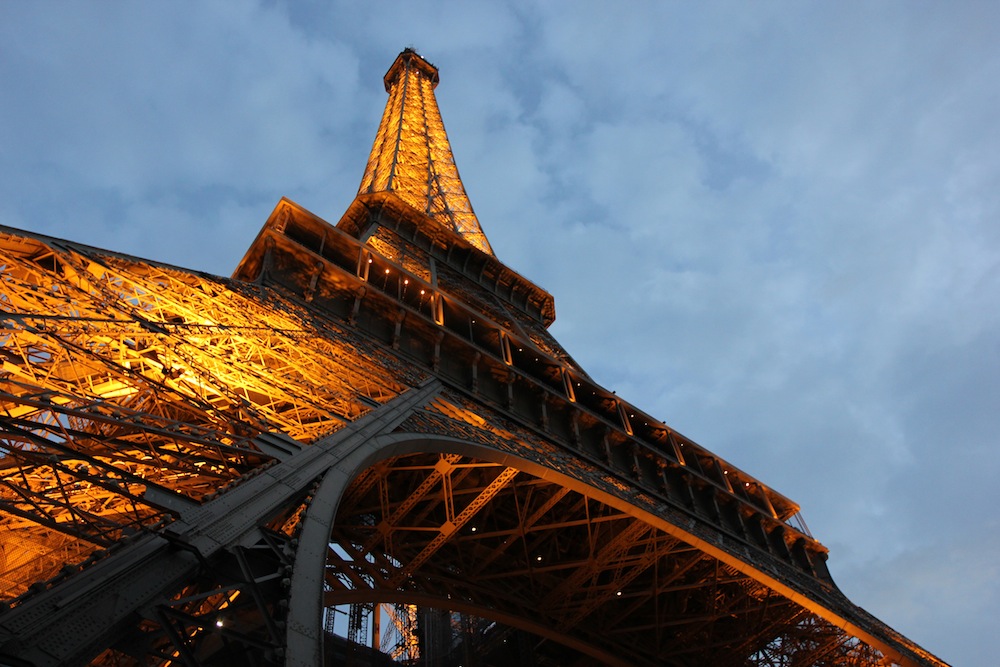
Tower from below.
I hate to start off my France blog with such a cliche, but I can’t help it! Ernest Hemingway said, “If you are lucky enough to have lived in Paris as a young man, then wherever you go for the rest of your life, it stays with you, for Paris is a moveable feast.”
Despite only spending a couple of days in Paris, I feel that this notion is true. A week in France was not nearly enough, from the beautiful and serene countryside in Normandy, to the small town of Bayeux and to the sprawling, vibrant Paris. (Don’t forget to click through the photos!)


Inspiration is everywhere and Normandy is gorgeous. We spent out first full day in France at Mont Saint Michel, originally built as an abbey back in the eighth century AD, and where nuns and monks continue to live even today. It is perched on an island and surrounded by winding cobbled stone streets and narrow alleyways.
Aside from visiting an ancient monastery, even with my pitiful prior knowledge of World War II, I was able to take so much away from some of the “D-Day” sites we visited as well. It is a hard war to connect to as a student from the states with little desire to learn about history. But in Normandy, vestiges of that terrible war are everywhere. Monuments, the shores, museums, memorials, graveyards, bunkers and war-scarred buildings are everywhere. Even today, it is not unusual for people in Normandy to find enormous unexploded bombs buried in the ground.


Never before have I had the opportunity to touch history as I did in the past week. I crawled through German bunkers on Omaha Beach, touched the remnants of old bridge structures used to supply the Allies, bombs, anti-aircraft guns, tanks, boats used to ferry the troops to the shores. My history has been piqued! Though we could not legally enter the graveyards in France due to the government shutdown (HUGE bummer), we got a good glimpse at the one at Omaha Beach. After seeing hundreds of rows of white crosses, making up some of the thousands of troops killed, I feel an obligation and responsibility to delve deeper into the history of the war and those events that changed the time we live in today.
At the Bayeux War Correspondents Festival, tucked away in a picturesque tiny town where everything shuts down at night aside from a couple of bars, great journalism was on display everywhere. Large photos were throughout the town, hanging on walls and atop buildings from photographers around the world. Though most of it was in French, the incredible work on display often needed little translation. James Nachetwey had two beautiful exhibitions, and an awards ceremony honored other journalists who risk their lives to tell extraordinary stories. One of the best parts of the festival though was the proximity to the journalists doing that work. At Bayeux, we found ourselves drinking a beer five feet from greats such as Nachtwey and Patrick Chauvel.


And lastly, Paris. All the hype really is true. The metro is much more aesthetically interesting than New York City, with different themes as you make your way from one part of the city to the other. Omar and I could have spent days in that metro, talking to people and taking their photographs. There is real life within those seemingly endless tunnels. And each time we came up or out from the metro, it was like we were in a new city. There is so much richness – the food, the wine, the people, the history, the culture. It’s incredible.


This includes streets filled with prostitutes – like the one we passed through often in the short time we were in Paris.
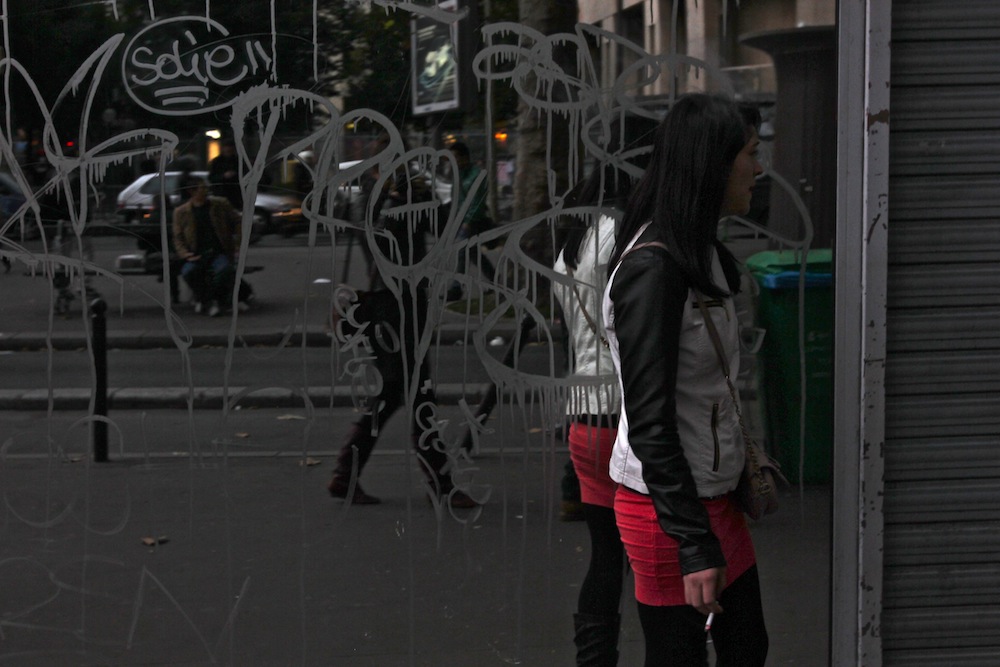
On a street filled with prostitutes in the Belleville District. Dozens of middle-aged Asian women can be seen loitering in this area, clad in short mini-skirts and jackets, smoking cigarettes, looking bored and propositioning promising-looking males as they walk by.
 One of the highlights for a book lover like myself was visiting Shakespeare and Company in the Latin Quarter in Paris. It was opened in 1951 and named in honor of Sylvia Beach’s historic Shakespeare and Company, which was frequented in the 1920s by writing giants such as Ezra Pound, James Joyce, Ernest Hemingway and F. Scott Fitzgerald, and sadly closed in 1940 during the Germany occupation (it never reopened). The smell of new and old books, the weathered bookshelves up to the ceilings, narrow aisles, tiny alcoves, worn chairs all gave the feeling of the past, where writers could come to find comfort and creativity.


In the foreword of a copy of A Moveable Feast that I’m reading, Patrick Hemingway, his only surviving son, wrote a beautiful passage that I think applies not just to Paris as a moveable feast, but of many places I have traveled and lived in.
“In later life the idea of a moveable feast became something very much like King Harry wanted St. Crispin’s Feast Day to be for “we happy few”: a memory of even a state of being that had become a part of you, a thing you could always have with you, no matter where you went or how you lived forever after, that you could never lose. An experience first fixed in time and space or a condition like happiness or love could be afterward moved or carried with you wherever you went in space and time.”
Syria Contemporary Art Fair in Beirut
With all of the problems and fears regarding a Syrian spillover into Lebanon, there are some masterful silver linings. This week I had an opportunity some of those silver linings at an exhibition of modern Syrian art at Beirut’s Artheum. The sleek space was filled with paintings, mixed media, bronze sculptures, stone, concrete installations, photography, among other mediums.
Over a million Syrians are estimated to be living in Lebanon – among them are some of Syria’s great artists. Syrians are flourishing in Lebanon’s already thriving art scene. In article in Boat Magazine, the writer quotes an artist who spoke to The Economist. “The revolution didn’t stop the Syrian art movement,” Rabee Kiwan said, who fled Syria and is now in Beirut, continuing, “On the contrary it made it more active, but inside Syria there are no more galleries and exhibitions.” Kiwan’s work can be found in the slideshow below, along with many other talented artists’.
US Embassy Protest in Lebanon
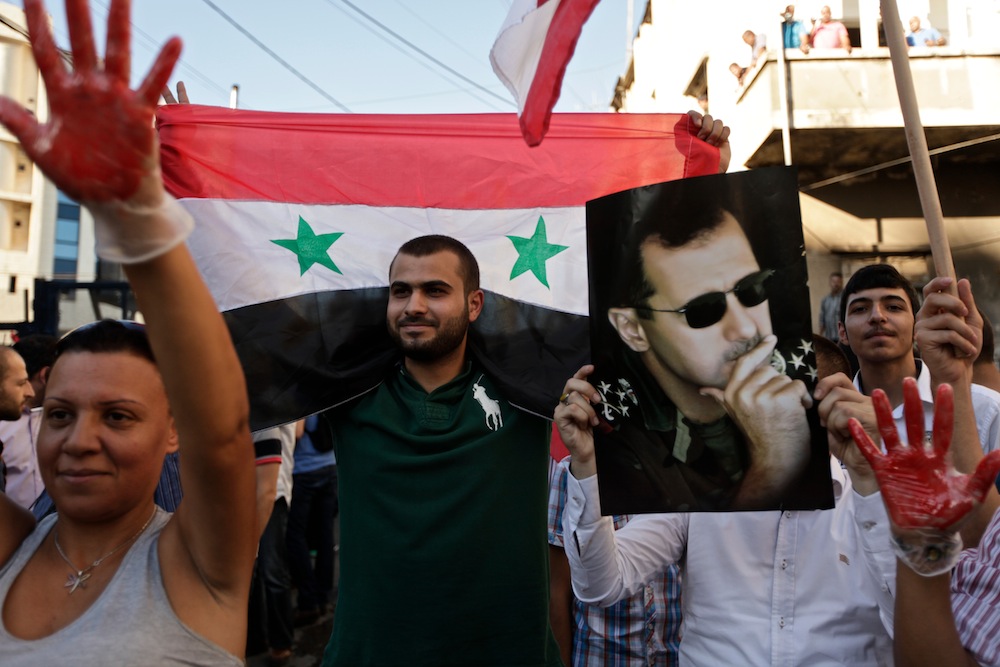
After it was announced yesterday that the U.S. Embassy had asked its non-emergency personnel and their family members to leave Lebanon yesterday because of security concerns, a protest of about 50 people gathered in front of one of the streets that lead to the American consulate in Awkar, Lebanon to decry potential military intervention of the United States in Syria.
”The blood will be on your hands Obama,” demonstrators yelled from the crowd of Syrian regime supporters, some of them waving gloved hands splattered with symbolic red paint.
As the region continues to wait and prepare for a possible U.S. intervention in Syria, there are many reports that have highlighted potential consequences of the strike. The Wall Street Journal reported on Thursday that the United States intercepted an Iranian official’s order for Iraqi militants to attack U.S. interests in Iraq’s capital, Baghdad. Now Lebanon reported this morning that pro-Syrian regime groups will target Western interests in Lebanon in the event of a strike, rather than attacking Israel from the south.
Below are some photos from yesterday’s demonstration, taken by Omar Alkalouti.


Lady Gaga’s Aura

I usually don’t write about pop music, but my friend Steven is a college professor who frequently uses pop culture as a tool in his writing classes. This week, I saw a post on Facebook that read the following:
“”Controversy” by Natalia Kills
“Aura” by Lady GaGa
“Blurred Lines” by Robin Thicke
“Same Love” by Macklemore & Ryan Lewis
“They Don’t Care About Us” by Michael Jackson
Pick one issue presented in the lyrics of one of the songs and write an analytical essay where you discuss the issue at length; dissect and analyze the lyrics, inject your own thoughts, and include outside research in which you either research the controversy of the song itself (ex: “Blurred Lines” being criticized for glorifying rape culture, or the exploitation of Muslim women in Gaga’s “Aura”), or research a particular issue presented in the lyrics (like the use of bath salts and “Molly” in society from “Controversy” or the criticism of the Catholic church in “Same Love”) and discuss it’s relationship to current popular culture.”
I have listened to the song a couple of times this early morning in Beirut, and read the lyrics several times as well. The song starts off promising, with the beginning, “I’m not a wandering slave, I am a woman of choice, my veil protects the gorgeousness of my face.” For me, this goes along with what many Muslim women I know have told me about why they feel covering their body, whether it be with a hijab, nikab, burqa, or something else, actually empowers them. They own what they offer to the public world by tastefully concealing the curves and shapes of their bodies.
There are a couple of things to consider. First, let’s be clear on what a burqa is. And a nikab. And a hijab.

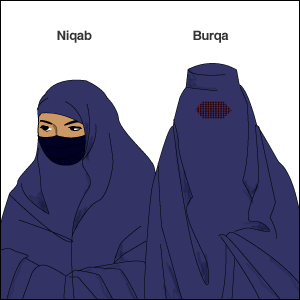

Images courtesy of Brad McCormick
This is a garment that is worn by some Muslim women that believe that their faces should not be seen by men that are not their “mahram” for them. This would include men whom they cannot marry, such as their father, brother, uncle, or son. Not all Muslim women wear the burqa, or adhere to the belief in the Qur’an of modest dress. But many do as well. Okay? Moving on.
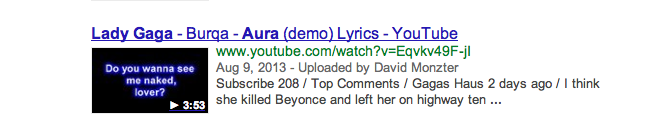
Next, let’s continue to the chorus of the song.
“Do you wanna see me naked, lover?
Do you wanna peek underneath the cover?
Do you wanna see the girl who lives behind the aura, behind the aura?
Do you wanna touch me, cosmic lover?
Do you wanna peek underneath the cover?
Do you wanna see the girl who lives behind the aura?
Behind the aura, behind the aura, behind the aura?”
This song sets a dangerous and unfortunate notion that sexualizes the women underneath the burqa. Women in the Middle East often have to contend with enormous issues related to wearing some sort of covering, not only as part of their religious practice, but as protection from harassment. This type of language only encourages viewing women as sexual objects who are asking for men to “peek underneath the cover.” Just to use the country of Egypt as an example – even when women are covered, they face a daily nightmare of sexual harassment. According to the United Nations Entity for Gender Equality and the Empowerment of Women, more than 99 percent of Egyptian women reported being sexually harassed. And amongst the intense protests and passion of the opposition in Egypt in Tahrir Square this July when they forced the ouster of Mohammed Morsi, women were being assaulted and raped.
Umema Aimen wrote in The Washington Post, “[Aura] perpetuates violence against women and contradicts the message in “Monster,” in which you condemned the “wolf in disguise.” In “[Aura],” you seem to suggest that by tearing off your clothes he is fulfilling your fantasy. It is a dangerous message that does not just affect Muslim women but all women. No woman wants to be tormented with unneeded attention, to be stalked and to be told that she was asking for it.”
But to go further than just reading criticisms online, I wanted to make sure though that my thoughts are not an orientalist way of looking at exploitation of Muslim women by asking my friends in the region.
One of my friends from Jordan messaged me this morning regarding my questions on the song. “I think this song was not meant to empower women more than it is to create controversy, viewing the burqa as a sex object hardly empowers women, and when she says “I’m not a wandering slave I am a woman of choice” what makes her think they’re slaves to begin with, in some cases yes women are forced to wear it but in others no, they wear it by choice so that doesn’t fall in with being a ‘slave.'”
Another friend from Jordan quickly chimed in. “It actually disgusts me the way she talks about women as objects. The point of hijab is not to be looked at this way and to be judged for whats in our head, yet she says first that she’s not a slave and she hides her beauty and then she talks about herself as a body. I see it offensive to all women, not just women in burqa.”
Further, I have a very good friend here in Lebanon who is constantly giving me new insights into life for women in the Middle East. When I finally dragged a response out of her, this is what she said. “Muslims in the West are always falling under stereotypes that are jeopardizing their freedom to practice their faith. One of my friends had to remove her veil after the Boston attacks in April because she was being harassed on the streets. People have the freedom to express their reservations on some of the practices that religions have, however, to ridicule and mock a symbol that represents a religion is pure ignorance and an act of intolerance.”
Certainly, there are people who think otherwise and three people are hardly more than a handful of opinions, but I do believe that this is representative of the way a lot of women from this region feel when they listen to this song.
In any case, I think like Miley Cyrus, Lady Gaga got what she was asking for by making this song: attention from controversy. And perhaps some may think we are all wrong in our criticism because ultimately, maybe not that much is changed by a single song. But this one song, combined with someone with her global reach, who has 59, 010, 967 likes on Facebook, she does have an impact. It has an impact. Even though her lyrics at the end seem to take back the significance of her singing about or wearing the burqa at all.
Crocodile in Beirut
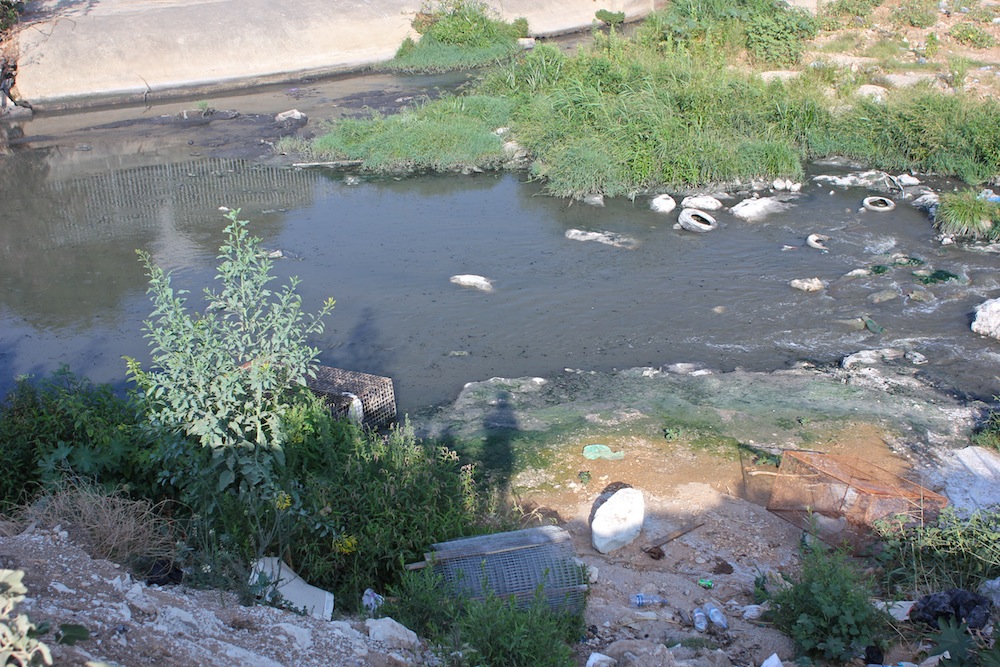
The cage used to try to capture the crocodile. Discarded animal remnants from the slaughterhouse were used as bait.
Though croc-mania has died down in Beirut since the end of July, when the nearly five-foot reptile was spotted by a reporter in the putrid Beirut River, the crocodile continues to elude the team trying to catch it. Headed up by Jason Meir, the director of Animals Lebanon (the same animal support group where I adopted my kitten from), the team has spent days down by the river since it was first reported, even working in shifts to keep the hundreds of curious Beiruiti-s from their natural inclination to toss rocks into the water whenever they think they have spotted the crocodile.
Days down by this river…a stomach-turning thought. We pulled up on the side of the road, next to the river. As soon as I stepped out of the car, the foul stench hit me. And kept getting stronger as I walked closer to the bank. The water is dirty greenish sludge of bubbling garbage…yes, BUBBLING. It looks like it’s raining on the surface all the time. Not too unbelievable when you consider that the nearby slaughterhouse, a fish-processing plant and a Sukleen factory (waste disposal) all dump into the stream, which flows into the beautiful Mediterranean Sea. We were quickly joined by Basal, a 15-year-old who works at the slaughterhouse and is a de-facto member of the search-and-rescue party, as well as a champion croc-spotter.
We didn’t think we were going to catch a glimpse, but after about ten minutes, two Sukleen workers began pointing toward the water. And I saw my first crocodile! Hidden underneath a tire.

Sukleen workers, so familiar with the crocodile that they have named it, alert us to its spot in the river.
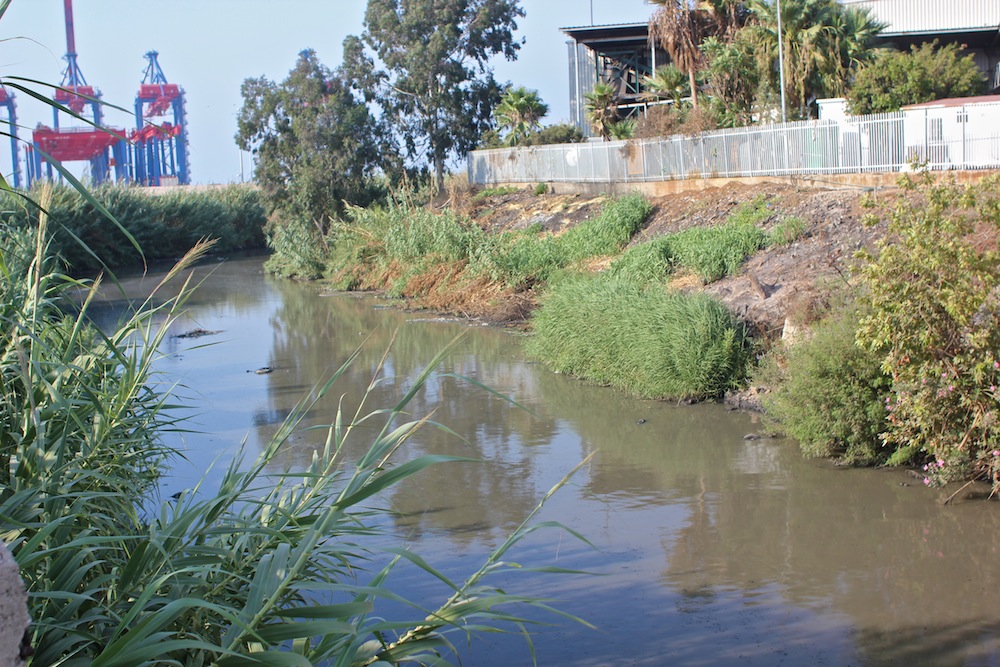
The river flowing into the Mediterranean Sea.

Working gloves by the river.
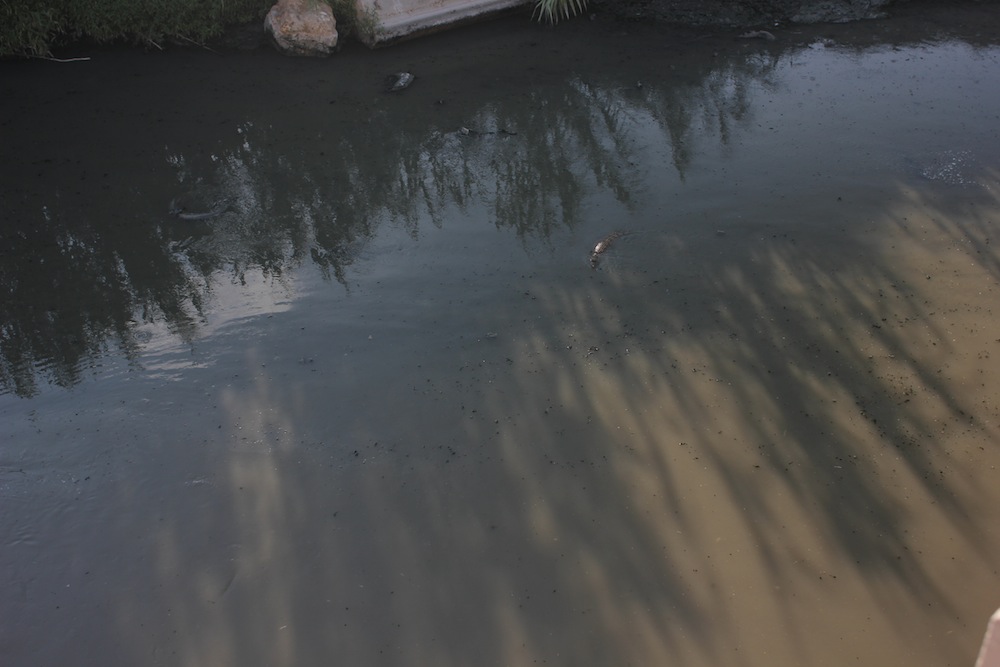
CROC!
According to Jason, the crocodile was probably dumped into the river after being bought from one of the many pet shops that sell exotic animals. Exotic animals are not a rare sight in Lebanon, which tops the international blacklist for illegal wildlife trafficking. Even at the weekly Souk al-Ahad, you can see peacocks, monkeys, foxes from Syria and even macaws.

Foxes in Souk al-Ahad that have been brought from Syria.

Brazilian macaw in the souk. Photo by Omar Alkalouti (http://omaralkalouti.com/)
Jason said that if the crocodile stays, there is a high likelihood that it will die on account of its immune system shutting down. They have been trying to bring in experts to help with the capture, but now with the uncertainty of stability and the threat of a strike on Syria, things could get complicated. Like so many other people and things, even the crocodile’s rescue waits on a decision from Obama.
President Obama’s Syria Speech
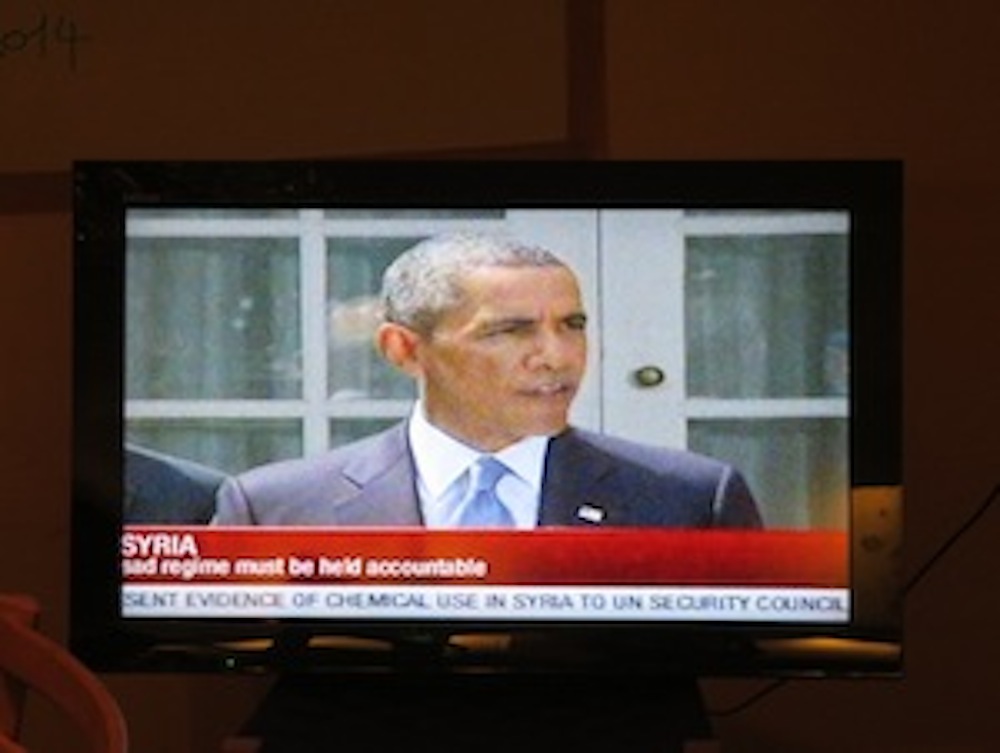
President Obama gives a speech on Syria on August 31, 2013. I take a terrible picture with a point and shoot.
All day, the streets of Beirut were quiet. And we were still waiting.
Before President Obama gave his speech, there were hardly any taxis or other cars on the usually bumping Gemmayze Street. But after Obama’s short but powerful speech, the streets came back to life. Taxis are back to laying obnoxiously long on their horns, people are drunkenly yelling, everything is back to normal. Many have let out a big “WHOOSH” of relief. For tonight, at least. Good night, Beirut.
Waiting For Tomorrow In Lebanon
Toward the end of this week, every morning when I wake up, I feel like I could’ve overslept a bomb. It’s so strange to meet the morning with no idea what you will find when you go out on the street. Then there’s still no solid decision on the US intervention in Syria – so we watch the political maneuvering all day, following the #BREAKING by #BREAKING hashtags. Pizza, beer, cigarettes and late nights, waiting to see what will happen.
United Nations Security Council, out. Britain, out. NATO, out. France and the United States, at the ready.
The streets here are noticeably more empty. Today, there wasn’t a soul in the normally chaotic post office. At a deserted cafe, a waitress says that people are afraid to come out. Most of the country seems to be collectively holding its breath. Of course, in Beirut, a lot of people party on, but there is definitely something in the air. It’s a perilous time for the region, and for Lebanon.
After all, the civil war in Syria is at more than Lebanon’s doorstep. Just today, a week after the deadliest bombing in Lebanon since the end of the civil war, three Lebanese and two Syrian men were charged in connection to the twin explosions in the northern city of Tripoli that killed at least 47 and injured more than 400 people. According to The Christian Science Monitor, one of the Syrian men who has been charged is allegedly a captain in a branch of Syrian intelligence.
It’s in this northern city of Tripoli where the effects of the Syrian war are felt acutely. Omar has spent spent months going back and forth to the city. He followed Sunni fighters who have been stockpiling weapons and stashing them in different secure areas as clashes continue with Alawites in nearby Jabal Mohsen. Tripoli is a city that has come to reflect the deep sectarian and ethnic divisions in the civil war in neighboring Syria. Events in Syria often trigger violence between the two sects, who strongly support opposite sides in the Syrian conflict. Both sides are heavily armed with RPGs, mortars, and heavy machine guns. The army is creating a buffer zone on the aptly named Syria Street, which serves as a front line between the battling sect.
Below are some of the photos from his photo essay.


Welcome to the Jungle.

Living in Lebanon can sometimes feel like, as my boyfriend Omar calls it, the jungle. It’s a crazy place (though sometimes not as crazy as media makes it out to be), with decades of past and current conflicts, sectarianism, Syrian spillover, different powerful groups running areas, along with the occasional rocket or bomb. Etcetera, etcetera. And of course, the ever-expanding Beirut souk that is gradually beginning to look like a jungle, filling every week with more exotic animals.
But all of these things are not why I feel like I live in the jungle. It’s actually because I moved in to a sweet little place that was charming on the first look. Unconventional and open. A split apartment, with a open terrace separating two rooms. One fully-constructed bedroom and across the way, a shack-like room with everything else. At sunset, it becomes a peaceful sanctuary, with the light spilling over the stone.
However, when it gets dark, the beasts of the Beirut wild come out. Cockroaches climb in through a cracked bathroom window, or a gap between the roof. A centipede at least six inches long skitters out from under a pile of dishes in the sink. A crumb of forgotten food is covered within minutes by wriggling ants. Feral cats watch from nearby, waiting for us to leave the terrace so it can tear through the garbage we have to hide outside to keep ants from taking over our shack.
By morning though, most of the creatures have retreated. Except the ants, but they’re only a minor problem (except when they get in the laundry). That’s why I felt safe sitting outside drinking my morning coffee, relaxing with my headphones on, after a night of nocturnal creature scares. That was, until a giant RAT, the size of a kitten (not being hyperbolic here), ran over my feet on his way back down the stairs to the street.

This wasn’t a cute “Ratatouille” rat. This was a giant, fat, disgusting beast that made my skin crawl for hours after our encounter on the patio.
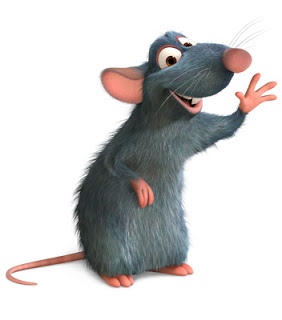
Not quite.

More like.
Luckily since then, we’ve picked up some Raid, as well as some local tricks for fighting back. Also, we added a lion to the mix.
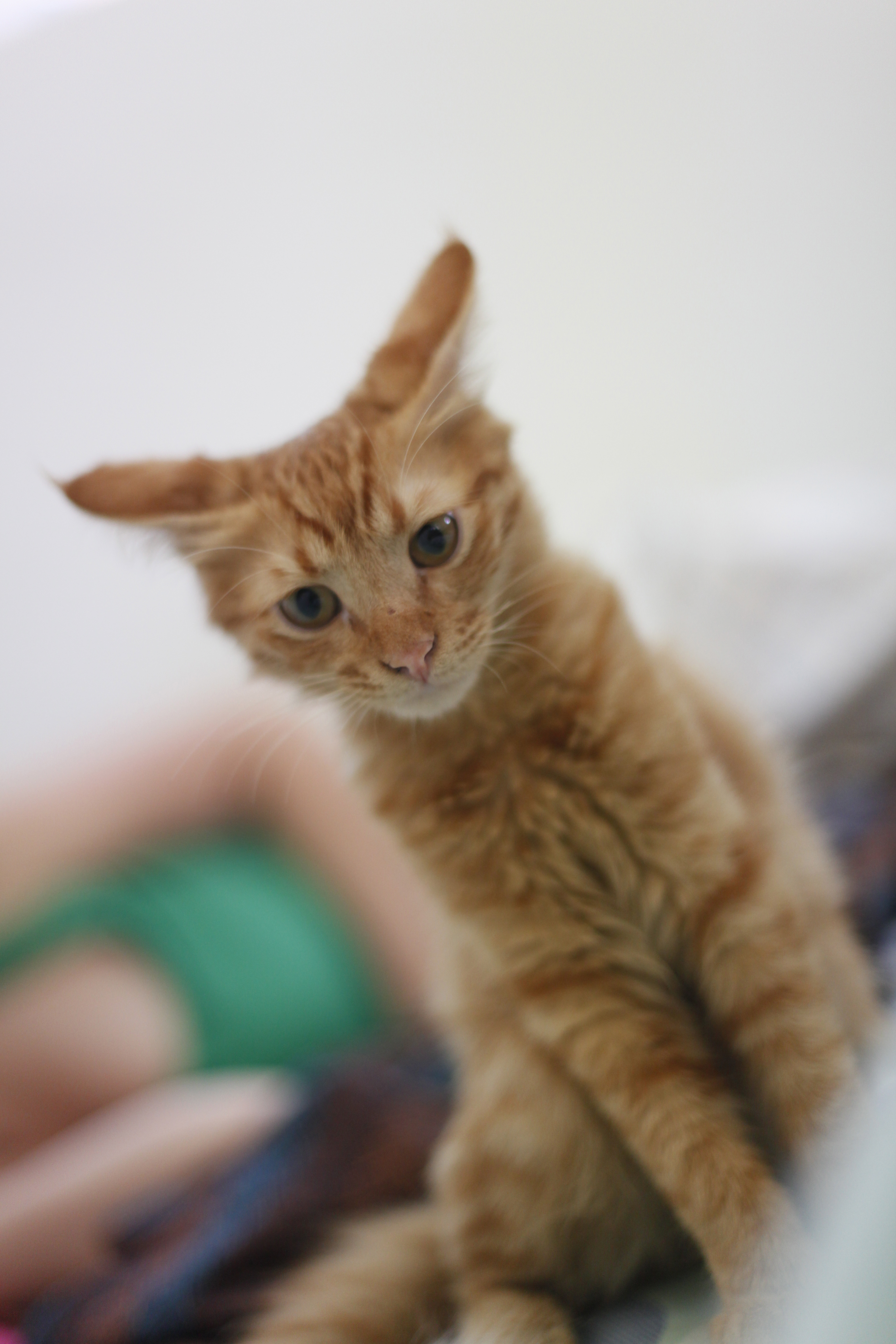
Albeit a small lion. Fitz Parker.
Our hope is that he grows into a Mustafa. Until then though, we’ll continue our turf war with the varmints, with the help of Fitz Parker. In the meantime, any suggestions for the offensive would be appreciated!
In a New York state of mind
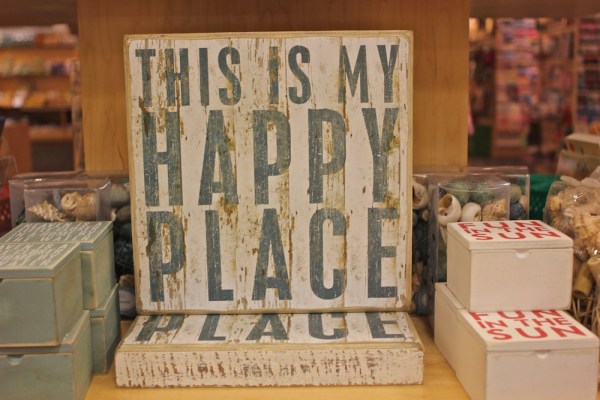
In Barnes and Noble.
I had been waiting for the shock of returning since I returned. Usually when I travel abroad and come back home, I am quickly struck by an overwhelming feeling of happiness and amazement at much how easier it can be in the United States, a country built for comfort.
But for the first couple of days, I felt normal. Not much had changed for me from Beirut to New York City. Except the prices of cabs, and you know, the fact that I could understand most of what was being said around me. Traveling was still a pain in the ass though. And though language wasn’t an issue, getting someone to stop and help me with directions was just as difficult. Most people just seemed really disconnected from the world around them, lost in Smartphones and whatever is playing on through their headphones.
Walking into a Barnes and Noble in New York City, I was finally struck. This is what I wrote in my notebook as I sat on the carpeted floor of the store.
“Everything is so orderly. There is a uniformed guard handing out plastic bags for each person to put their dripping umbrella in. I’m completely soaked because I don’t have an umbrella, or a coat. I liked being the alone one in the street crazy enough to just let themselves get waterlogged.
I’ve always liked the comfort of Barnes and Noble. A place that lets you read and touch whatever you’d like. No one watching you over your shoulder as you flip through magazines. No bartering.
I take out my camera to snap a photo and hesitate. “Is it allowed?” I’ve been in the Middle East too long.
I just wander around, unable to lay my attention on any one section or book for more than a moment. I can understand everything that is being said around me. And I understand why people are acting the way they are. People are sitting on the floor everywhere and it’s perfectly normal. It’s this realization that brings tears to my eyes and a lump in my throat. I guess I’ve missed you after all.”
Stranger than fiction.
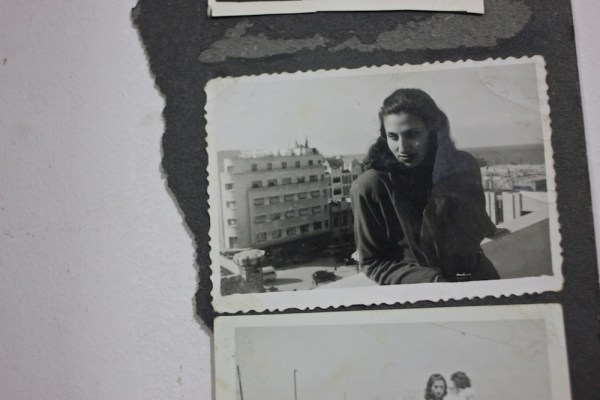
An old black and white photo in Lebanon.
After watching Stranger Than Fiction today, I was reminded of something I often forget – even though the title of my first blog and Tumblr is “Ordinary Life Illuminated.”
I was reminded of was the beauty of nuance. The importance of the simple things. They don’t seem to matter much, but actually are the things that make our lives…real.
At the end of Stranger Than Fiction, the narrator says over a beautiful sequence of scenes, “As Harold took a bite of Bavarian sugar cookie, he finally felt as if everything was going to be ok. Sometimes, when we lose ourselves in fear and despair, in routine and constancy, in hopelessness and tragedy, we can thank God for Bavarian sugar cookies. And, fortunately, when there aren’t any cookies, we can still find reassurance in a familiar hand on our skin, or a kind and loving gesture, or subtle encouragement, or a loving embrace, or an offer of comfort, not to mention hospital gurneys and nose plugs, an uneaten Danish, soft-spoken secrets, and Fender Stratocasters, and maybe the occasional piece of fiction. And we must remember that all these things, the nuances, the anomalies, the subtleties, which we assume only accessorize our days, are effective for a much larger and nobler cause. They are here to save our lives. I know the idea seems strange, but I also know that it just so happens to be true. And, so it was, a wristwatch saved Harold Crick. “
How true. From my rooftop, I see a maid in a loose blue cotton outfit, attaching damp shirts and pants with wooden clothespins to a line hung from the balcony. I see a family sitting on a couch swing, moving slowly back and forth. I see a young man eating breakfast at a small table in a patch of shade on his rooftop, a bowl of hummus lined up beside his laptop. A man several buildings away is wearing a tight white tank top and smoking a cigarette, hanging halfway out his window with his left forearm resting on the sill.
I look behind me, where there are black and white photos of complete strangers taped to my wall that I bought at a souk. Isn’t that why people are driven to collect photographs of people’s lives that they have no attachment to? To connect with humanity’s idiosyncrasies, to recognize yourself in others? It helps us realize how much we have in common with people we’ve never met.


A friend of mine wrote something to me once that I’ve just stumbled upon that helps explain why we need to connect to other people, and how it helps us understand who we are. Though he was writing in regards to fiction, I believe the same holds true for non-fiction – our lives.
He said, “In his novel, The Lazarus Project, Aleksandar Hemon writes, ‘All the lives we could live, all the people we will never know, never will be, they are everywhere. That is what the world is.’ Fiction allows us to explore people, places and times not our own. Moreover, it puts us into those people, places and times and lets us find the little bit of ourselves that exists in them –‘what the world is.’ It makes us realize that only by sheer luck or misfortune are we born into this family or that religion, this country or that ability. Things could all be different.”
A dance practice, a cigarette clutched between the fingers of an old man as he reads, a woman looking into the distance on a rooftop. Life.
 look up