The Vagus Nerve
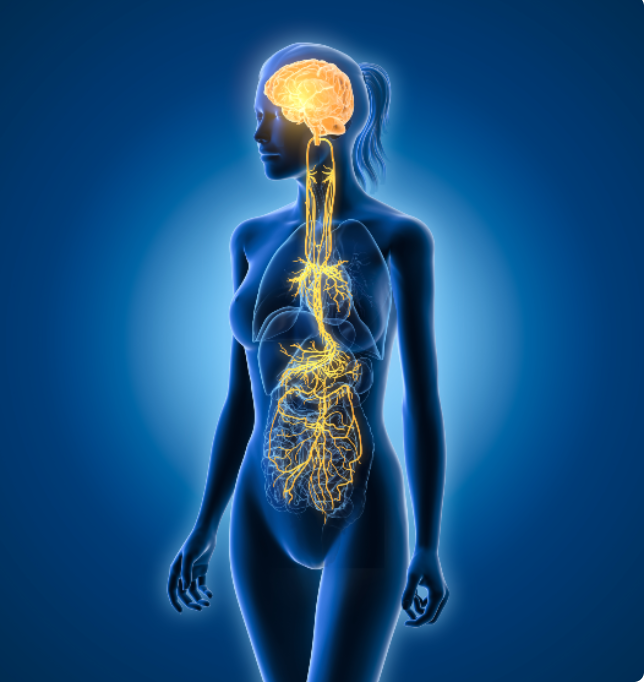
Hi everyone! If you got here from the QR Code at Mardi Gras, here are some additional resources where you can learn about the vagus nerve, why it’s important and what are some ways to work with it to help regulate your nervous system. Understanding how our autonomic nervous system operates, and practicing growing our window of tolerance for this time we’re living in is a beautiful and necessary thing we need to do for ourselves and for each other. To be action-oriented, we have to first have a regulated nervous system. The vagus nerve and its role in regulation is just one part of that, but an important part!
What is the vagus nerve?
The vagus nerve, also called “the wandering nerve,” (it’s actually a pair of cranial nerves) are the longest nerves in the body, that go from our brain stem to our colon.
This video below gives extensive information about the vagus nerve, and breaks down some of the influencer hype on social media. It’s important to know that a handful of quick hacks are never going to resolve something as complex as the unconscious processes of our bodies that evolved to help us survive, but I will say I have worked with some of the recommendations I see out there (I shared more information about those later in this post) and have had a lot of success utilizing them as resources as I’ve learned the nuanced rhythms of my own nervous system.
What is the Autonomic Nervous System and What Does It Have To Do With the Vagus Nerve and My Regulation?
The first video below is a great, quick introduction to the autonomic nervous system: the parasympathetic nervous system (PNS “rest and digest”) and the sympathetic nervous system (SNS “fight or flight”). Our autonomic nervous system is the part of our nervous system that operating what is behind the scenes that we are not consciously controlling and happen automatically – think temperature regulation, breathing, digestion, heart rate. The autonomic nervous regulates these involuntary processes and helps us to keep a healthy balance between excited and relaxed (in Polyvagal Theory, they call this state “Ventral Vagal”), in a state of homeostasis.
The vagus nerve makes up 75% of the PNS. Our PNS helps our body to calm down after stress by slowing down our heart rate, supporting digestion. The PNS also encourages rest and recovery by helping our muscles relax and lowering our blood pressure. If you have an interest in going deeper, this next video will bring you into the inner workings of the PNS.
Similarly, the other main branch of our autonomic nervous system is the sympathetic nervous system (SNS). It’s responsible for the body’s “fight-or-flight” response. It is the crucial partner to the PNS, and helps us to manage stress and prepare for action when our nervous systems detect potential dangerous or challenging situations.
Vagus Nerve Activation
It’s important to have a balance of “good stress” and relaxation. In the time we’re living in though, we’re overloaded constantly, and many of are walking around in states of overwhelm, activated, agitated and operating from a stress response. Building out your resources for how you can help yourself get back into balance from that state is a worthy work.
Related to the vagus nerve, here is a list of some of my favorites that activate the vagus nerve, and practices I do daily to help bring myself back to a regulated state. A reminder that these practices don’t resolve anxiety or depression, and aren’t meant to resolve an emergency, but rather are some practices to reach for when you need to relax and calm down.
- Deep breathing: Practice slow, diaphragmatic breathing, focusing on extending your exhales longer than your inhales.
- Cold exposure: Splash cold water on your face, place an ice pack on the back of your neck, or take a brief cold shower.
- Humming or singing: Make loud humming sounds or sing your favorite song to activate the vagus nerve through vocal cord vibrations. Sing it LOUD!
- Laughter: Watch a funny video, remember a funny memory, connect with a friend over a joke to stimulate the vagus nerve through belly laughter.
- Cold water face immersion (mammalian dive reflex): Submerge your forehead, eyes, and at least 2/3 of both cheeks in cold water for a quick vagus nerve boost. Make sure you read how to do this safely, and its not meant to be used in an emergency.
- Do some grounding, barefoot in the grass. Close your eyes if you feel safe and practice that deep breathing.
- Go for a slow walk. Pay attention to the nature around you. Look at
- Put your tongue to the roof of your mouth. This activates your vagus nerve and lets your body know you’re safe.
- Hug someone. Including self hugging! I do this one a lot. Hugging for at least 20 seconds releases the chemical oxytocin, which decreases cortisol, increases the PNS, and dampens the SNS.
- Shake it out! Shake your tail, shake your hands, shake your head. This never fails to interrupt a spiral for me.
- Breathe into my feet. I like to take deep breaths and exhale all the way down to my feet. It helps me cultivate somatic awareness through my body, and I always end up with some big yawns releasing any stuck energy.
For anyone of you who have made it to the end, I hope this was a helpful introduction to the incredible vague nerve(s) and how we can work with it to be more balanced, whole humans. I am certain that regulation holds the hand of being able to orient from a place of love and contribution.
One more add – Polyvagal Theory
The cards I gave out at Mardi Gras are from Deb Dana’s Polyvagal Card Deck. If you are interested in learning more about Polyvagal Theory, developed by Stephen Porges in the 1990s, below is a short informative video that takes you through the basics. The theory focuses on the autonomic nervous system (which remember, is made up of the PMS “rest and digest” and SNS “fight or flight”) and how it shapes our lived experience. The vagus nerve is a crucial part of understanding how our bodies regulate our physiological responses to our environment and the sense of safety and connection we are or are not able to feel at any given time.
I’ll note that there is criticism of Polyvagal Theory for not having robust enough science to back up parts of the theory, but it is recognized to be useful and is utilized successfully by clinicians.
Personally, I have benefitted significantly from using this theory with practitioners and therapists to better understand my experiences, and to work with the challenges I’ve had in cultivating a more regulated nervous system.
 look up
very informative