30 days of self-love: movement is the medicine
Why do I love movement? I’ve asked myself this many times over the past few years. I’ve always loved to dance, but in hindsight, I had always moved performatively, for attention. Movement always had an agenda for me tied up with my ego. Even by myself, I’d constantly catch myself imagining some sort of audience.
No, the movement I’ve fallen in love with is organic movement, the movement with no rules, acceptance, following impulses, letting go of narratives, shame, fear, changing my relationship with pain, tumbling into myself in a way I have only found through those times lost in writing a personal story or psychedelics.
I’ve experienced the gift of doing this in community a few times in the past couple of weeks. Dancing alone is its own incredible journey and also, there is something so magical about accessing this kind of freedom with a group of people. So far, I haven’t experienced anything else like it.
There are different types of ecstatic dance. It is an ancient freeform of dance without any rules, except generally no talking, no alcohol or drugs, no phones or cameras and no judgement – of yourself or others.
I have found many moments of complete self-acceptance during the times I dance and move. It is the only consistent direct line to my river, “the felt sense,” (a term coined by Eugene Gendlin and used by Peter Levine), where I am sensations, my essence flows wild, where the truth of my experience lives, where my bodily knowing, my intelligence is. It’s where I can touch, be, the spectrum of emotions I have held onto, what is unnamable inside, pure joy, love and what has been nearly unbearable to witness. This is where my play bursts from, awe, creativity, where I can whirl in embrace with my shadows and not be taken out by fear or shame. I feel in this space I am divinity and energy. It is my favorite place to explore.
Gabrielle Roth, who created the ecstatic dance of 5Rhythms, wrote so beautifully of the dance in this Huffington Post article.
“Between the head and feet of any given person is a billion miles of unexplored wilderness. I yearned to know what was going on in that wilderness, not only in me, but in everyone else as well.
And so, movement became both my medicine and my meditation. Having found and healed myself in its wild embrace, I became a mapmaker for others to follow, but not in my footsteps, in their own. Many of us are looking for a beat, something solid and rooted where we can take refuge and begin to explore the fluidity of being alive, to investigate why we often feel stuck, numb, spaced-out, tense, inert, and unable to stand up or sit down or unscramble the screens that reflect our collective insanity.”
And when we find this in ourselves, we can find that in others too. It’s not even a conscious thought but a discovery that we are all divine fluidity. Moving, like Joseph Pintauro wrote in The Magic Box, “into the open kingdoms of each other.” Moving into the healing. (All book photos are from “The Magic Box)


I got the opportunity to participate in an experiential class focused on trauma and embodied movement with Manuela Mischke-Reeds and Dr. Scott Lyons through The Embody Lab, and they helped me to understand what I already felt in my body – that movement is our first language, our primary language, our primordial language. We come from the water. It is who we are. Lyons explained that our motor neurons myelinated (meaning a protective sheath has been formed around neuron’s axons, which are crucial for transmitting information/electrical impulses effectively and quickly) before our sensory neurons, “meaning we were meant to move before we could sense. That is a such a significant evolutionary development that we are made to move and express. That is part of how we come and interact in the world, is not just what we take in, but how we move in relation to it.”
It’s important to name that pain is complex, emotional and physical, and Mischke-Reeds spoke about movement existing in all of us. Beyond the thinking of the traditional way of movement, there is access for all. There are micro movements that can be accessed. Breathing is movement. No matter the physical or emotional injury or the compromise in a body, we all hold this innate wisdom inside of us.
This is the hopefulness of movement to me. This is the alchemy of movement. Trauma transmuted, our soma (our body) is the alchemist and the storyteller with no ego. Only endless possibilities. Where we are the wizards of everything.
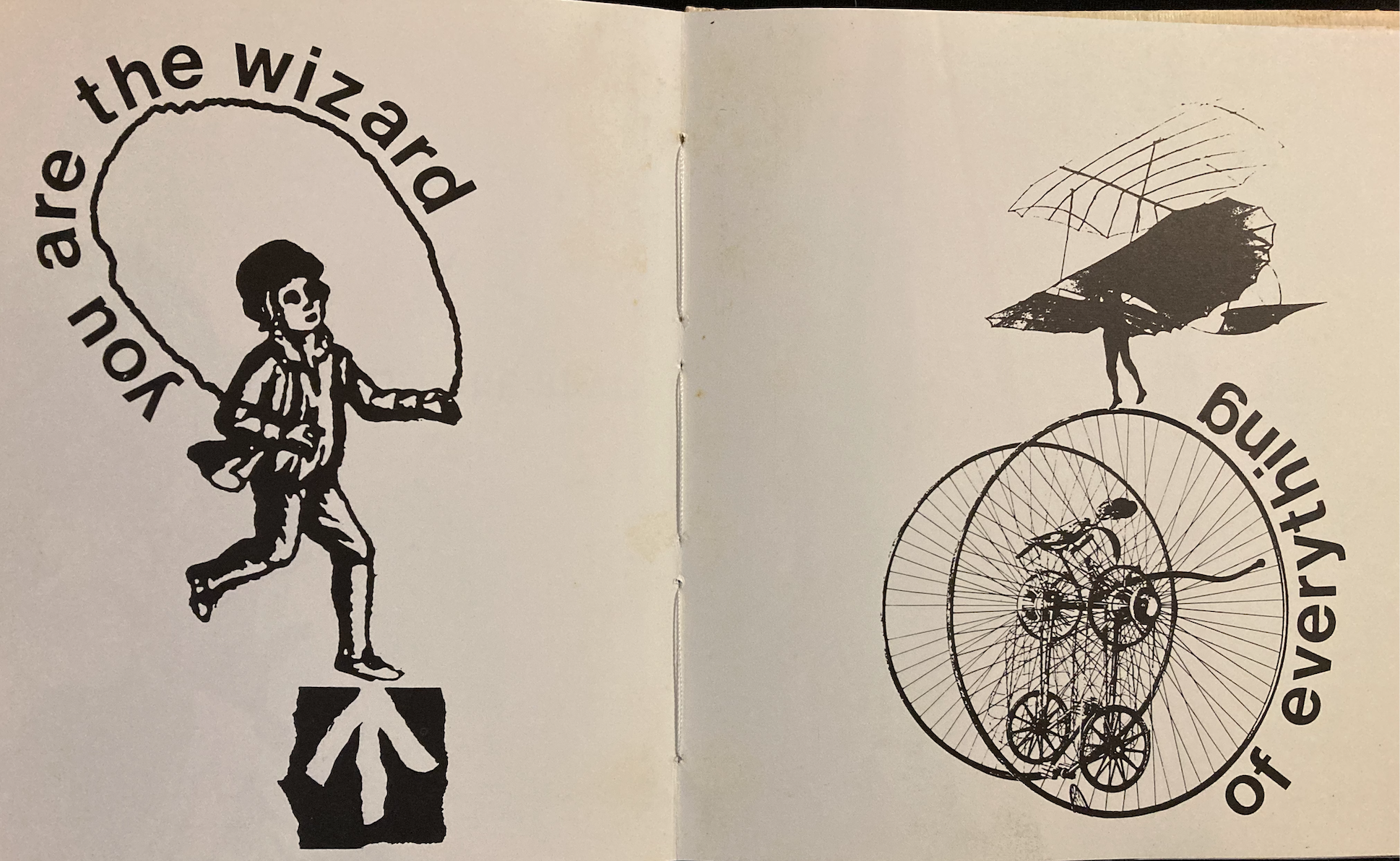
It feels important to add one last piece, which is something I struggled with when I first started to move in this way, and that still comes up.
How do we focus on movement and really be able to put the narrative of the story that comes along with it to the side, on a shelf?
I’ll share Lyons’ answer to this in full, because I think it’s really beautiful, and something I’ve experienced to be true.
“I think it’s a process, it’s a process of trust that I can exist without the story, that I can be seen and heard and understood without the narrative, that externally and internally that sometimes we have to ask, ‘What is my experience without the story? Am I still valid? Am I still worthy of the bigness of my experience, if I’m not holding onto the details of the narrative? And it’s a practice of going, we’re just putting it on the shelf. We’ll come back to it…We’re not ignoring it. We’re not dis-evaluating it. It’s simply so that we can be a compassionate witness to ourselves first. And we might notice after that, as we attend to ourselves, how the narrative might actually change. Because narratives are flexible stories, narratives of experience can actually change. And they do. But we can’t change the story from trying to change the story. But we can process our experience and the narrative can reform.”
So maybe, try it out. Observe the movement of your breath. Pay attention as you sit down, and stand up. Find a playlist (from a recent ecstatic dance here in New Orleans) that resonates with you, even a song. Here is an article of how to try it out on your own.
Can you move like no one is watching you? Can you feel that truth? That we are the magical swing?
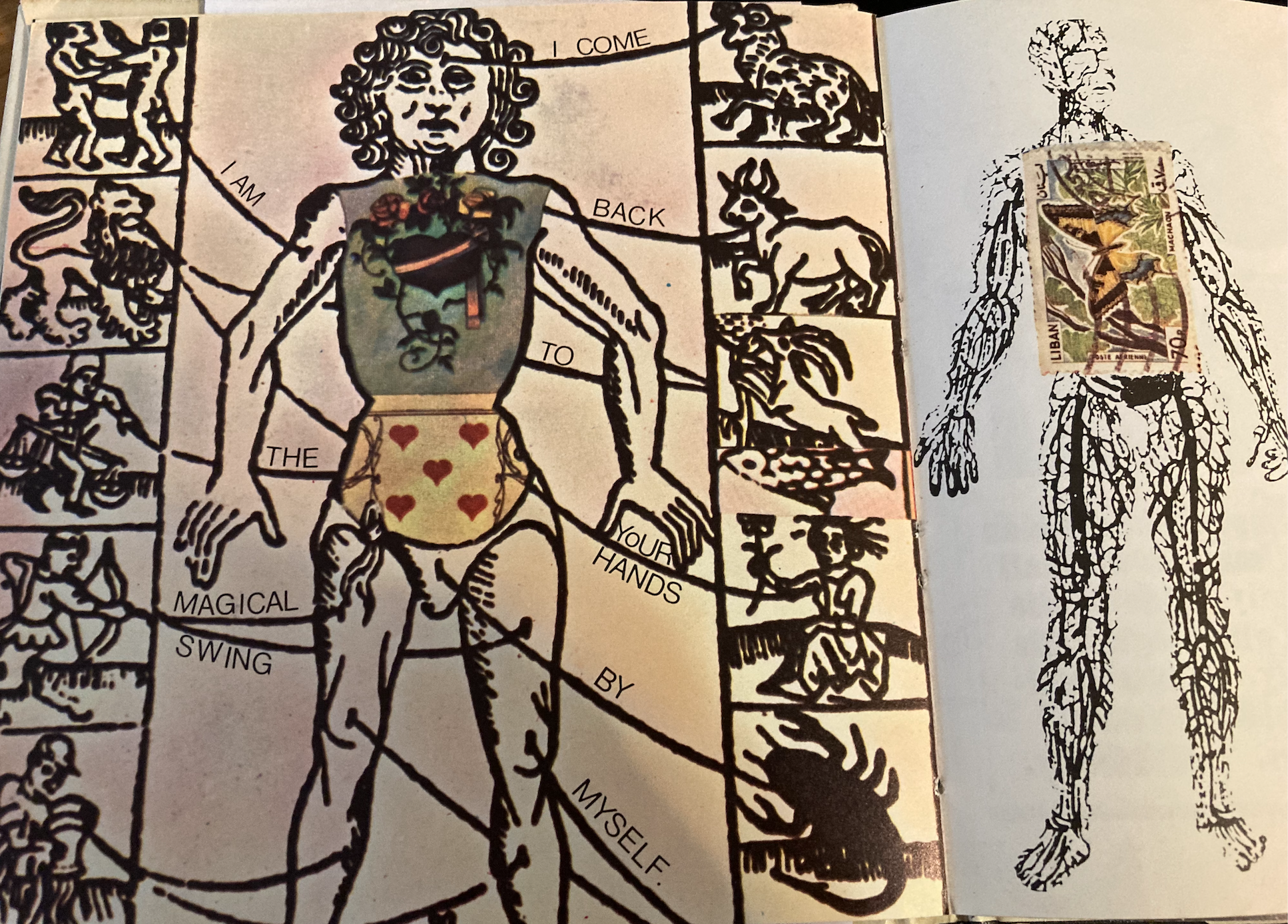

As Gabrielle Roth said above, “This is our dance.” Self-love is following the yellow brick road.
 look up